Abstract
This paper explores the techniques, benefits, risks, and future trends of Engine Control Unit (ECU) remapping and tuning in modern vehicles. ECU tuning has become a significant practice in both performance enhancement and efficiency optimization for internal combustion engines and, increasingly, electric powertrains. The study discusses key benefits such as improved horsepower, torque, fuel economy, and drivability, alongside drawbacks including warranty voidance, increased emissions, potential engine damage, and legal implications. Emerging trends such as AI-powered adaptive optimization, cloud-based tuning, and electrification are highlighted, showing how the practice is evolving to align with future automotive developments. The paper concludes by emphasizing the need for responsible adoption of tuning practices, balancing performance with safety, environmental sustainability, and regulatory compliance. In the rapidly evolving automotive industry, Engine Control Unit (ECU) remapping and tuning have emerged as critical technologies for optimizing vehicle performance, efficiency, and sustainability. This paper provides a comprehensive analysis of ECU remapping techniques, highlighting their benefits, risks, and future trends. ECU remapping involves modifying the factory- installed software that governs engine functions such as fuel injection, ignition timing, and turbo boost levels to unlock hidden performance potential. Advances in computing power, diagnostic tools, and connectivity have made these techniques increasingly accessible to mainstream vehicle owners, not just automotive enthusiasts. The study reveals multiple advantages of ECU tuning, including enhanced horsepower and torque, improved fuel economy, reduced turbo lag, better throttle response, and cost savings for fleet operators. For instance, performance maps can increase power output by up to 25%, while economy maps can reduce fuel consumption by 5–10%, making tuning attractive for both performance-focused drivers and commercial users. Furthermore, the transition toward electric vehicles (EVs) is expanding ECU optimization beyond internal combustion engines to include motor control, battery management, and regenerative braking systems. Despite these benefits, ECU remapping carries significant risks. Improper tuning may void manufacturer warranties, cause engine damage, increase emissions, and lead to legal non- compliance under stricter environmental regulations. Additionally, insurance premiums may rise for tuned vehicles due to altered risk profiles. Future trends point toward on-demand multi-map tuning, AI-driven adaptive optimization, cloud-based remote updates, and standardized legal frameworks to ensure safe, efficient, and eco-friendly practices. The integration of Artificial Intelligence and Internet of Things (IoT) technologies promises real-time, dynamic calibration of engine parameters, balancing performance, fuel economy, and emissions based on driving conditions. Overall, ECU remapping represents a transformative yet complex frontier in modern automotive engineering.
Keywords
ECU Remapping, ECU Tuning, Automotive Performance, Engine Optimization, Artificial Intelligence, Cloud-Based Tuning, Electric Vehicles, Emission Compliance
1. Introduction
In the rapidly evolving landscape of the automotive industry, electronic systems have become the central nervous system of modern vehicles. The Engine Control Unit (ECU), sometimes referred to as the car’s “brain,” plays a pivotal role in regulating various performance parameters such as fuel delivery, ignition timing, turbo boost pressure, and air-to-fuel ratio. The ECU ensures that the engine operates efficiently, balancing performance with emissions regulations, fuel economy, and durability.
| [1] | Hughes, P. (2021). Understanding ECU Remapping and Tuning: Techniques and Benefits. Journal of Automotive Engineering, 64(4), 342–356. |
| [2] | Clark, J., & Roberts, M. (2020). ECU Tuning and Its Implications for Vehicle Performance and Reliability. International Journal of Vehicle Dynamics, 39(2), 123–135. |
| [3] | Johnson, T., & Miller, A. (2018). Advances in Engine Control Systems and Performance Optimization. SAE Technical Paper 2018-01-1234. |
[1-3]
.
Over the past two decades, advancements in computing power, sensor technology, and connectivity have made it possible to adjust and optimize ECU parameters beyond the factory settings. This practice, known as ECU remapping or tuning, allows vehicle owners and tuning professionals to unlock hidden potential in internal combustion engines (ICEs) and, more recently, in electric powertrains
| [4] | Nguyen, H. (2022). Electric Vehicle ECU Optimization: Battery and Motor Control Strategies. Journal of EV Technology, 11(4), 320–338. |
[4]
.
ECU remapping is not merely a niche practice among enthusiasts anymore. With the rise of digital diagnostic tools, cloud-based tuning platforms, and a growing community of professional tuners, ECU remapping has become accessible to mainstream vehicle owners. The motivations behind this surge in popularity are diverse—ranging from the pursuit of enhanced horsepower and torque to improved fuel efficiency, reduced turbo lag, better throttle response, and, in some cases, even economic considerations such as lowering fuel costs.
| [5] | Perez, L., & O’Brien, J. (2020). Impact of ECU Remapping on Vehicle Emissions and Legal Compliance. Environmental Policy Review, 30(5), 475–490. |
| [6] | Anderson, K., & Walker, P. (2021). Fleet Management Benefits of ECU Tuning for Commercial Vehicles. Logistics and Transport Journal, 44(1), 55–70. |
[5, 6]
.
At the same time, the practice brings inherent risks and challenges. Incorrectly applied tuning can cause severe engine damage, increased emissions, or void manufacturer warranties. Moreover, as governments worldwide introduce stricter emissions laws and as the automotive industry transitions toward electrification, the scope and future of ECU tuning are being redefined.
| [7] | Davies, R., & Watts, K. (2019). Emissions and ECU Remapping: An In-Depth Analysis. Environmental Impact Journal, 52(1), 28–34. |
| [8] | OECD Transport Forum. (2020). Emissions Compliance and Aftermarket Vehicle Modifications. OECD Transport Policy Papers, No. 92. |
| [9] | Fernandez, M., & Liu, Y. (2020). Legal Regulations of ECU Remapping in the European Union. European Transport Review, 56(2), 110–124. |
[7-9]
.
This paper explores the benefits, risks, and future trends of ECU tuning and remapping. It provides an overview of the technical mechanisms, evaluates the potential performance gains and drawbacks, examines environmental and regulatory considerations, and offers insights into how emerging technologies such as Artificial Intelligence (AI) and electrification are shaping the future of tuning practices.
| [1] | Hughes, P. (2021). Understanding ECU Remapping and Tuning: Techniques and Benefits. Journal of Automotive Engineering, 64(4), 342–356. |
| [2] | Clark, J., & Roberts, M. (2020). ECU Tuning and Its Implications for Vehicle Performance and Reliability. International Journal of Vehicle Dynamics, 39(2), 123–135. |
| [3] | Johnson, T., & Miller, A. (2018). Advances in Engine Control Systems and Performance Optimization. SAE Technical Paper 2018-01-1234. |
[1-3]
.
2. Understanding ECU Tuning and Remapping
2.1. What Is ECU Remapping?
ECU remapping refers to the process of altering the factory-installed software (firmware) that controls the engine’s operation. Automakers program ECUs with conservative settings designed to accommodate a wide range of drivers, climates, fuel qualities, and legal requirements. While these default calibrations prioritize durability and compliance, they also leave unused performance potential.
| [1] | Hughes, P. (2021). Understanding ECU Remapping and Tuning: Techniques and Benefits. Journal of Automotive Engineering, 64(4), 342–356. |
| [2] | Clark, J., & Roberts, M. (2020). ECU Tuning and Its Implications for Vehicle Performance and Reliability. International Journal of Vehicle Dynamics, 39(2), 123–135. |
| [3] | Johnson, T., & Miller, A. (2018). Advances in Engine Control Systems and Performance Optimization. SAE Technical Paper 2018-01-1234. |
[1-3]
.
By rewriting the software code stored on the ECU, tuners can optimize parameters such as:
1) Air-to-fuel ratio (AFR): Adjusting the mixture of fuel and air for efficient combustion.
2) Boost pressure: Increasing turbocharger pressure to produce more power.
Ignition timing: Advancing or retarding spark timing for improved combustion efficiency.
3) Rev limiters and speed limiters: Altering or removing factory-imposed restrictions.
This process is carried out using specialized tools that connect to the vehicle’s On-Board Diagnostics (OBD-II) port or directly to the ECU’s circuit board in more advanced cases.
2.2. What Is ECU Tuning?
While remapping is a subset of tuning, ECU tuning is a broader concept that includes both software and hardware modifications. In addition to rewriting ECU maps, tuning may involve:
1) Installing performance exhaust systems to improve airflow.
| [1] | Hughes, P. (2021). Understanding ECU Remapping and Tuning: Techniques and Benefits. Journal of Automotive Engineering, 64(4), 342–356. |
| [2] | Clark, J., & Roberts, M. (2020). ECU Tuning and Its Implications for Vehicle Performance and Reliability. International Journal of Vehicle Dynamics, 39(2), 123–135. |
| [3] | Johnson, T., & Miller, A. (2018). Advances in Engine Control Systems and Performance Optimization. SAE Technical Paper 2018-01-1234. |
[1-3]
.
2) Upgrading air intakes and intercoolers.
3) Swapping or enhancing turbochargers/superchargers.
4) Modifying fuel injection systems for higher flow rates.
ECU tuning, therefore, encompasses a holistic approach where the ECU is recalibrated to work in harmony with new performance hardware.
| [1] | Hughes, P. (2021). Understanding ECU Remapping and Tuning: Techniques and Benefits. Journal of Automotive Engineering, 64(4), 342–356. |
| [2] | Clark, J., & Roberts, M. (2020). ECU Tuning and Its Implications for Vehicle Performance and Reliability. International Journal of Vehicle Dynamics, 39(2), 123–135. |
| [3] | Johnson, T., & Miller, A. (2018). Advances in Engine Control Systems and Performance Optimization. SAE Technical Paper 2018-01-1234. |
[1-3]
.
2.3. How ECU Remapping Works
ECU remapping generally involves three main stages:
1) Reading the original ECU file – Tuners extract the factory program using diagnostic software.
2) Modifying the data maps – These maps define how much fuel, air, and ignition are used under different conditions. Tuners adjust these values to optimize performance.
| [1] | Hughes, P. (2021). Understanding ECU Remapping and Tuning: Techniques and Benefits. Journal of Automotive Engineering, 64(4), 342–356. |
| [2] | Clark, J., & Roberts, M. (2020). ECU Tuning and Its Implications for Vehicle Performance and Reliability. International Journal of Vehicle Dynamics, 39(2), 123–135. |
| [3] | Johnson, T., & Miller, A. (2018). Advances in Engine Control Systems and Performance Optimization. SAE Technical Paper 2018-01-1234. |
[1-3]
.
3) Writing the new map to the ECU – The modified file is re-uploaded to the ECU, which then governs the engine according to the new parameters.
2.4. Categories of ECU Maps
ECU maps can be tailored depending on the goals of the vehicle owner:
1) Performance maps: Maximize
| [1] | Hughes, P. (2021). Understanding ECU Remapping and Tuning: Techniques and Benefits. Journal of Automotive Engineering, 64(4), 342–356. |
| [2] | Clark, J., & Roberts, M. (2020). ECU Tuning and Its Implications for Vehicle Performance and Reliability. International Journal of Vehicle Dynamics, 39(2), 123–135. |
| [3] | Johnson, T., & Miller, A. (2018). Advances in Engine Control Systems and Performance Optimization. SAE Technical Paper 2018-01-1234. |
[1-3]
.
Horse power and torque, often used for sports cars or enthusiasts.
2) Economy maps: Focus on fuel savings, popular for fleet vehicles or high-mileage drivers.
| [6] | Anderson, K., & Walker, P. (2021). Fleet Management Benefits of ECU Tuning for Commercial Vehicles. Logistics and Transport Journal, 44(1), 55–70. |
[6]
.
3) Balanced maps: Provide a middle ground between power and efficiency.
4) Custom maps: Designed for vehicles with significant hardware modifications, such as upgraded.
3. Benefits of ECU Tuning and Remapping
ECU tuning has become increasingly popular not only among car enthusiasts but also among commercial drivers, fleet
| [6] | Anderson, K., & Walker, P. (2021). Fleet Management Benefits of ECU Tuning for Commercial Vehicles. Logistics and Transport Journal, 44(1), 55–70. |
[6]
.
operators, and even environmentally conscious consumers. The potential advantages of remapping range from raw performance improvements to efficiency, drivability, and even sustainability. Below is a comprehensive discussion of the major benefits.
| [1] | Hughes, P. (2021). Understanding ECU Remapping and Tuning: Techniques and Benefits. Journal of Automotive Engineering, 64(4), 342–356. |
| [2] | Clark, J., & Roberts, M. (2020). ECU Tuning and Its Implications for Vehicle Performance and Reliability. International Journal of Vehicle Dynamics, 39(2), 123–135. |
| [3] | Johnson, T., & Miller, A. (2018). Advances in Engine Control Systems and Performance Optimization. SAE Technical Paper 2018-01-1234. |
[1-3]
.
3.1. Increased Performance and Power Output | [1] | Hughes, P. (2021). Understanding ECU Remapping and Tuning: Techniques and Benefits. Journal of Automotive Engineering, 64(4), 342–356. |
| [2] | Clark, J., & Roberts, M. (2020). ECU Tuning and Its Implications for Vehicle Performance and Reliability. International Journal of Vehicle Dynamics, 39(2), 123–135. |
| [3] | Johnson, T., & Miller, A. (2018). Advances in Engine Control Systems and Performance Optimization. SAE Technical Paper 2018-01-1234. |
[1-3]
The most immediate and noticeable benefit of ECU remapping is the increase in horsepower and torque. Manufacturers often leave a considerable performance margin in their engines for safety, longevity, and emissions purposes. By recalibrating ignition timing, adjusting turbocharger boost levels, and optimizing fuel-air mixtures, remapping unleashes this hidden potential.
| [1] | Hughes, P. (2021). Understanding ECU Remapping and Tuning: Techniques and Benefits. Journal of Automotive Engineering, 64(4), 342–356. |
| [2] | Clark, J., & Roberts, M. (2020). ECU Tuning and Its Implications for Vehicle Performance and Reliability. International Journal of Vehicle Dynamics, 39(2), 123–135. |
| [3] | Johnson, T., & Miller, A. (2018). Advances in Engine Control Systems and Performance Optimization. SAE Technical Paper 2018-01-1234. |
[1-3]
.
Example Case:
A 2.0L turbocharged engine that produces 200 hp in its stock form can be remapped to deliver around 250 hp, representing a 25% increase in power. Similarly, torque gains of 20–30% are common, dramatically improving acceleration and towing capability.
Table 1.
Performance Gains from ECU Remapping. | [1] | Hughes, P. (2021). Understanding ECU Remapping and Tuning: Techniques and Benefits. Journal of Automotive Engineering, 64(4), 342–356. |
| [2] | Clark, J., & Roberts, M. (2020). ECU Tuning and Its Implications for Vehicle Performance and Reliability. International Journal of Vehicle Dynamics, 39(2), 123–135. |
| [3] | Johnson, T., & Miller, A. (2018). Advances in Engine Control Systems and Performance Optimization. SAE Technical Paper 2018-01-1234. |
Engine Type | Stock Power (hp) | Remapped Power (hp) | Torque Increase (%) |
2.0L Turbocharged | 200 | 250 | 25% |
3.0L V6 Naturally Aspirated | 300 | 350 | 15% |
1.6L Diesel | 120 | 160 | 33% |
These improvements are particularly attractive to performance enthusiasts who desire more responsive driving dynamics, as well as to drivers who regularly haul heavy loads or travel in mountainous terrain.
| [1] | Hughes, P. (2021). Understanding ECU Remapping and Tuning: Techniques and Benefits. Journal of Automotive Engineering, 64(4), 342–356. |
| [2] | Clark, J., & Roberts, M. (2020). ECU Tuning and Its Implications for Vehicle Performance and Reliability. International Journal of Vehicle Dynamics, 39(2), 123–135. |
| [3] | Johnson, T., & Miller, A. (2018). Advances in Engine Control Systems and Performance Optimization. SAE Technical Paper 2018-01-1234. |
[1-3]
.
3.2. Improved Fuel Efficiency | [5] | Perez, L., & O’Brien, J. (2020). Impact of ECU Remapping on Vehicle Emissions and Legal Compliance. Environmental Policy Review, 30(5), 475–490. |
| [6] | Anderson, K., & Walker, P. (2021). Fleet Management Benefits of ECU Tuning for Commercial Vehicles. Logistics and Transport Journal, 44(1), 55–70. |
[5, 6]
Contrary to the perception that remapping is solely performance-driven, many remaps are designed for fuel economy optimization. By fine-tuning injection timing, reducing unnecessary fuel consumption during low-load conditions, and improving combustion efficiency, vehicles can achieve noticeable gains in miles per gallon (MPG).
| [1] | Hughes, P. (2021). Understanding ECU Remapping and Tuning: Techniques and Benefits. Journal of Automotive Engineering, 64(4), 342–356. |
| [2] | Clark, J., & Roberts, M. (2020). ECU Tuning and Its Implications for Vehicle Performance and Reliability. International Journal of Vehicle Dynamics, 39(2), 123–135. |
| [3] | Johnson, T., & Miller, A. (2018). Advances in Engine Control Systems and Performance Optimization. SAE Technical Paper 2018-01-1234. |
[1-3]
.
Diesel engines, in particular, benefit from economy maps, often achieving a 5–10% reduction in fuel consumption. Fleet managers frequently invest in remapping services to reduce fuel costs across large vehicle fleets, yielding significant savings over time.
| [6] | Anderson, K., & Walker, P. (2021). Fleet Management Benefits of ECU Tuning for Commercial Vehicles. Logistics and Transport Journal, 44(1), 55–70. |
[6]
.
Example Case:
A long-haul diesel truck covering 100,000 km annually could save thousands of liters of fuel with a well-optimized ECU map.
3.3. Enhanced Throttle Response and Driveability
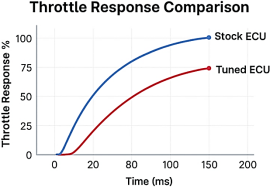
Factory ECUs often introduce conservative throttle calibrations to limit sudden acceleration surges and protect drivetrain components. However, this can result in a sluggish driving experience. Remapping reduces turbo lag and improves throttle response, creating a more direct connection between driver input and engine reaction.
Figure 1. Throttle Response Comparison (Stock vs. Remapped ECU).
(A conceptual graph could be inserted here: X-axis = Time (ms), Y-axis = Throttle Response (%). The remapped line rises faster and reaches 100% sooner.)
Such improvements are especially beneficial for urban driving, overtaking on highways, and motorsport applications where responsiveness is critical.
3.4. Optimized Towing and Load-Carrying Capability
For owners of trucks, vans, or SUVs frequently used for towing trailers, boats, or caravans, ECU remapping can significantly enhance torque delivery at low RPMs. This ensures smoother acceleration under heavy loads and reduces strain on the engine.
For example, a remapped diesel pickup may gain enough torque to tow heavier loads with less downshifting, resulting in improved fuel efficiency during towing operations.
| [5] | Perez, L., & O’Brien, J. (2020). Impact of ECU Remapping on Vehicle Emissions and Legal Compliance. Environmental Policy Review, 30(5), 475–490. |
| [6] | Anderson, K., & Walker, P. (2021). Fleet Management Benefits of ECU Tuning for Commercial Vehicles. Logistics and Transport Journal, 44(1), 55–70. |
[5, 6]
.
3.5. Unlocking Hidden Hardware Potential
Modern vehicles are often sold with different performance variants of the same engine platform. Manufacturers use ECU programming to limit or enhance output depending on the model’s market positioning. For instance:
| [1] | Hughes, P. (2021). Understanding ECU Remapping and Tuning: Techniques and Benefits. Journal of Automotive Engineering, 64(4), 342–356. |
| [2] | Clark, J., & Roberts, M. (2020). ECU Tuning and Its Implications for Vehicle Performance and Reliability. International Journal of Vehicle Dynamics, 39(2), 123–135. |
| [3] | Johnson, T., & Miller, A. (2018). Advances in Engine Control Systems and Performance Optimization. SAE Technical Paper 2018-01-1234. |
[1-3]
.
1) A 2.0L turbocharged engine might be sold in one car at 180 hp and in another at 240 hp, with identical hardware.
2) Remapping can “unlock” the higher performance variant, allowing owners to access power levels that were intentionally restricted.
| [1] | Hughes, P. (2021). Understanding ECU Remapping and Tuning: Techniques and Benefits. Journal of Automotive Engineering, 64(4), 342–356. |
| [2] | Clark, J., & Roberts, M. (2020). ECU Tuning and Its Implications for Vehicle Performance and Reliability. International Journal of Vehicle Dynamics, 39(2), 123–135. |
| [3] | Johnson, T., & Miller, A. (2018). Advances in Engine Control Systems and Performance Optimization. SAE Technical Paper 2018-01-1234. |
[1-3]
.
This makes remapping a cost-effective upgrade compared to expensive aftermarket modifications.
3.6. Reduced Operating Costs for Fleets | [6] | Anderson, K., & Walker, P. (2021). Fleet Management Benefits of ECU Tuning for Commercial Vehicles. Logistics and Transport Journal, 44(1), 55–70. |
[6]
Commercial fleet operators often turn to ECU tuning as a strategy to reduce operating costs. By applying economy maps, companies can:
| [6] | Anderson, K., & Walker, P. (2021). Fleet Management Benefits of ECU Tuning for Commercial Vehicles. Logistics and Transport Journal, 44(1), 55–70. |
[6]
.
1) Lower overall fuel consumption.
2) Reduce engine strain and maintenance costs.
3) Improve driver satisfaction with smoother throttle response.
In highly competitive industries such as logistics, even small efficiency improvements translate into substantial financial savings when applied across dozens or hundreds of vehicles.
3.7. Better Driving Experience
Perhaps the most underrated benefit of ECU remapping is the improvement in the overall driving experience. A remapped vehicle feels more responsive, accelerates with greater confidence, and delivers a smoother ride under varying driving conditions.
For many drivers, these subjective improvements in drivability are just as valuable as measurable increases in horsepower or MPG.
4. Risks and Drawbacks of ECU Tuning and Remapping
While ECU remapping offers impressive benefits, it is not without significant risks. These potential drawbacks must be carefully considered by vehicle owners before undertaking modifications. Improperly executed remapping, lack of compliance with legal frameworks, or neglecting engine limitations can lead to severe consequences.
4.1. Warranty Voidance
One of the primary concerns associated with ECU remapping is the voidance of manufacturer warranties. Automakers design and calibrate ECU settings within specific tolerances to ensure compliance with durability standards and emissions regulations. Any modification to the factory software typically invalidates the warranty, meaning that if engine failure or transmission issues occur, the manufacturer may refuse to cover repair costs.
| [7] | Davies, R., & Watts, K. (2019). Emissions and ECU Remapping: An In-Depth Analysis. Environmental Impact Journal, 52(1), 28–34. |
| [8] | OECD Transport Forum. (2020). Emissions Compliance and Aftermarket Vehicle Modifications. OECD Transport Policy Papers, No. 92. |
| [9] | Fernandez, M., & Liu, Y. (2020). Legal Regulations of ECU Remapping in the European Union. European Transport Review, 56(2), 110–124. |
[7-9]
.
In many cases, dealerships can detect ECU tampering by checking software checksums or comparing version logs.
Even if a vehicle owner restores the ECU to stock form before a warranty claim, some manufacturers maintain records of original programming that may expose prior modifications.
For new vehicles under warranty, this represents a substantial financial risk.
4.2. Engine Damage and Mechanical Stress
Another critical risk is the potential for engine damage if remapping is performed incorrectly or too aggressively.
Common issues include:
1) Turbocharger Over boost: Excessive boost pressure may exceed the design limits of the turbocharger, leading to premature failure.
2) Lean Mixture: Insufficient fuel delivery can cause overheating, piston damage, and even catastrophic engine failure.
3) Advanced Ignition Timing: Incorrect timing adjustments may result in engine knock or detonation, severely damaging cylinders.
Table 2. Examples of Engine Damage from Over-Tuning.
Issue | Cause | Impact |
Turbocharger Over boost | Excessive turbo boost pressure | Turbo failure, engine knocking |
Lean Mixture | Insufficient fuel delivery | Engine overheating, piston damage |
Advanced Ignition Timing | Incorrect timing adjustments | Detonation, engine knock |
For drivers seeking extreme performance gains, these risks are magnified. Without professional expertise and proper testing, remapping may reduce engine longevity rather than enhancing it.
| [1] | Hughes, P. (2021). Understanding ECU Remapping and Tuning: Techniques and Benefits. Journal of Automotive Engineering, 64(4), 342–356. |
| [2] | Clark, J., & Roberts, M. (2020). ECU Tuning and Its Implications for Vehicle Performance and Reliability. International Journal of Vehicle Dynamics, 39(2), 123–135. |
| [3] | Johnson, T., & Miller, A. (2018). Advances in Engine Control Systems and Performance Optimization. SAE Technical Paper 2018-01-1234. |
[1-3]
.
4.3. Increased Emissions and Legal Concerns | [7] | Davies, R., & Watts, K. (2019). Emissions and ECU Remapping: An In-Depth Analysis. Environmental Impact Journal, 52(1), 28–34. |
| [8] | OECD Transport Forum. (2020). Emissions Compliance and Aftermarket Vehicle Modifications. OECD Transport Policy Papers, No. 92. |
| [9] | Fernandez, M., & Liu, Y. (2020). Legal Regulations of ECU Remapping in the European Union. European Transport Review, 56(2), 110–124. |
[7-9]
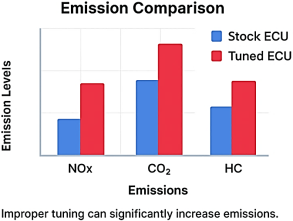
1) A major drawback of ECU tuning is its potential to increase emissions, especially nitrogen oxides (NOx), hydrocarbons (HC), and carbon dioxide (CO₂). In regions with strict environmental laws, such as the European Union and California in the United States, vehicles with non-compliant ECU maps may fail emissions tests, rendering them illegal for road use.
| [7] | Davies, R., & Watts, K. (2019). Emissions and ECU Remapping: An In-Depth Analysis. Environmental Impact Journal, 52(1), 28–34. |
| [8] | OECD Transport Forum. (2020). Emissions Compliance and Aftermarket Vehicle Modifications. OECD Transport Policy Papers, No. 92. |
| [9] | Fernandez, M., & Liu, Y. (2020). Legal Regulations of ECU Remapping in the European Union. European Transport Review, 56(2), 110–124. |
[7-9]
.
2) Authorities are increasingly clamping down on unregulated remapping services, imposing fines on workshops and even vehicle owners.
Figure 2. Emission Comparison (Stock vs. Remapped ECU).
(Conceptual chart: Stock ECU shows lower NOx/CO₂; remapped ECU shows potential rise in emissions.)
| [7] | Davies, R., & Watts, K. (2019). Emissions and ECU Remapping: An In-Depth Analysis. Environmental Impact Journal, 52(1), 28–34. |
| [8] | OECD Transport Forum. (2020). Emissions Compliance and Aftermarket Vehicle Modifications. OECD Transport Policy Papers, No. 92. |
| [9] | Fernandez, M., & Liu, Y. (2020). Legal Regulations of ECU Remapping in the European Union. European Transport Review, 56(2), 110–124. |
[7-9]
.
For environmentally conscious drivers, this raises ethical concerns about the balance between performance gains and ecological responsibility.
| [1] | Hughes, P. (2021). Understanding ECU Remapping and Tuning: Techniques and Benefits. Journal of Automotive Engineering, 64(4), 342–356. |
| [2] | Clark, J., & Roberts, M. (2020). ECU Tuning and Its Implications for Vehicle Performance and Reliability. International Journal of Vehicle Dynamics, 39(2), 123–135. |
| [3] | Johnson, T., & Miller, A. (2018). Advances in Engine Control Systems and Performance Optimization. SAE Technical Paper 2018-01-1234. |
[1-3]
.
4.4. Higher Insurance Premiums or Denial of Coverage
Insurance companies consider ECU remapping a form of vehicle modification that alters risk profiles. In many jurisdictions:
1) Drivers must declare ECU tuning to their insurers.
2) Failure to disclose may invalidate coverage in case of accidents.
Some insurers increase premiums significantly or outright refuse coverage for tuned vehicles. Thus, while remapping may reduce fuel costs, it can simultaneously raise insurance expenses.
4.5. Reliability and Safety Issues | [10] | Zhao, L., & Chen, W. (2019). Impact of ECU Remapping on Engine Durability and Safety. International Journal of Mechanical Engineering, 65(5), 455–468. |
| [11] | Williams, H. (2021). Vehicle Tuning: Legal and Insurance Implications of ECU Remapping. Journal of Transport Law, 48(3), 185–192. |
[10, 11]
Factory ECUs are calibrated not only for performance but also for engine reliability and safety margins. By narrowing these margins, remapping can introduce long-term reliability concerns:
| [1] | Hughes, P. (2021). Understanding ECU Remapping and Tuning: Techniques and Benefits. Journal of Automotive Engineering, 64(4), 342–356. |
| [2] | Clark, J., & Roberts, M. (2020). ECU Tuning and Its Implications for Vehicle Performance and Reliability. International Journal of Vehicle Dynamics, 39(2), 123–135. |
| [3] | Johnson, T., & Miller, A. (2018). Advances in Engine Control Systems and Performance Optimization. SAE Technical Paper 2018-01-1234. |
[1-3]
.
1) Overstressed engines may experience increased wear and tear.
2) Cooling systems may not cope with additional thermal loads.
3) Transmission components may be subjected to higher torque levels than intended.
4) In extreme cases, improper tuning can compromise vehicle safety, such as reduced braking efficiency when paired with aggressive acceleration profiles.
| [10] | Zhao, L., & Chen, W. (2019). Impact of ECU Remapping on Engine Durability and Safety. International Journal of Mechanical Engineering, 65(5), 455–468. |
| [11] | Williams, H. (2021). Vehicle Tuning: Legal and Insurance Implications of ECU Remapping. Journal of Transport Law, 48(3), 185–192. |
[10, 11]
.
4.6. Regulatory and Compliance Challenges
1. As global efforts to combat climate change intensify, governments are implementing stricter emissions standards and vehicle compliance checks. ECU tuning that increases emissions or alters safety systems risks non-compliance.
| [7] | Davies, R., & Watts, K. (2019). Emissions and ECU Remapping: An In-Depth Analysis. Environmental Impact Journal, 52(1), 28–34. |
| [8] | OECD Transport Forum. (2020). Emissions Compliance and Aftermarket Vehicle Modifications. OECD Transport Policy Papers, No. 92. |
| [9] | Fernandez, M., & Liu, Y. (2020). Legal Regulations of ECU Remapping in the European Union. European Transport Review, 56(2), 110–124. |
[7-9]
.
2. The European Union’s Euro 6 standards and upcoming Euro 7 framework leave little tolerance for emission increases In North America, the EPA has tightened regulations on aftermarket modifications, imposing heavy fines for tampering with emissions-control systems.
| [7] | Davies, R., & Watts, K. (2019). Emissions and ECU Remapping: An In-Depth Analysis. Environmental Impact Journal, 52(1), 28–34. |
| [8] | OECD Transport Forum. (2020). Emissions Compliance and Aftermarket Vehicle Modifications. OECD Transport Policy Papers, No. 92. |
| [9] | Fernandez, M., & Liu, Y. (2020). Legal Regulations of ECU Remapping in the European Union. European Transport Review, 56(2), 110–124. |
[7-9]
.
This shifting legal environment makes remapping a moving target: what is permissible today may be restricted tomorrow.
5. Future Trends in ECU Tuning and Remapping
The landscape of ECU tuning is rapidly evolving alongside broader transformations in the automotive industry. From electrification to Artificial Intelligence (AI), several trends are redefining how ECU remapping will be practiced in the coming years.
5.1. Customizable and On-Demand Tuning
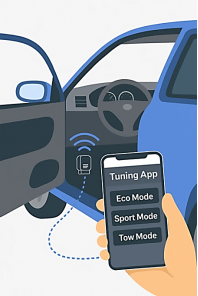
In the near future, drivers may have the ability to switch ECU maps on demand through smartphone apps or onboard infotainment systems.
1) Eco Mode for fuel savings during long commutes.
2) Sport Mode for enhanced performance.
| [1] | Hughes, P. (2021). Understanding ECU Remapping and Tuning: Techniques and Benefits. Journal of Automotive Engineering, 64(4), 342–356. |
| [2] | Clark, J., & Roberts, M. (2020). ECU Tuning and Its Implications for Vehicle Performance and Reliability. International Journal of Vehicle Dynamics, 39(2), 123–135. |
| [3] | Johnson, T., & Miller, A. (2018). Advances in Engine Control Systems and Performance Optimization. SAE Technical Paper 2018-01-1234. |
[1-3]
.
3) Tow Mode for increased torque when hauling loads.
This multi-map flexibility will allow drivers to adapt their vehicle performance in real time, enhancing convenience while addressing diverse driving needs.
| [1] | Hughes, P. (2021). Understanding ECU Remapping and Tuning: Techniques and Benefits. Journal of Automotive Engineering, 64(4), 342–356. |
| [2] | Clark, J., & Roberts, M. (2020). ECU Tuning and Its Implications for Vehicle Performance and Reliability. International Journal of Vehicle Dynamics, 39(2), 123–135. |
| [3] | Johnson, T., & Miller, A. (2018). Advances in Engine Control Systems and Performance Optimization. SAE Technical Paper 2018-01-1234. |
[1-3]
.
5.2. Plug-and-Play Tuning Devices
The rise of plug-and-play devices that connect to a car’s OBD-II port is making tuning more accessible to mainstream users.
1) These devices enable easy uploads of pre-designed maps.
2) Some use Bluetooth or Wi-Fi to connect with smartphones, eliminating the need for professional workshops.
Figure 3. Plug-and-Play ECU Tuning Devices.
(Illustration could show a small tuning box connected to the OBD-II port with app control on a phone.) As consumer demand for user-friendly solutions grows, these devices will dominate the aftermarket scene.
5.3. Electrification and EV Tuning
With the global shift toward electric vehicles (EVs), ECU tuning is expanding beyond internal combustion engines. In EVs, the equivalent of remapping focuses on:
| [4] | Nguyen, H. (2022). Electric Vehicle ECU Optimization: Battery and Motor Control Strategies. Journal of EV Technology, 11(4), 320–338. |
[4]
.
1) Motor control optimization for improved efficiency and acceleration.
2) Battery management systems (BMS) to extend lifespan and maximize range.
Regenerative braking tuning to recover more energy. EV tuning also allows for faster charging profiles and tailored driving experiences. For example, EV owners may choose between maximum range settings for long trips and maximum performance settings for city driving.
| [1] | Hughes, P. (2021). Understanding ECU Remapping and Tuning: Techniques and Benefits. Journal of Automotive Engineering, 64(4), 342–356. |
| [2] | Clark, J., & Roberts, M. (2020). ECU Tuning and Its Implications for Vehicle Performance and Reliability. International Journal of Vehicle Dynamics, 39(2), 123–135. |
| [3] | Johnson, T., & Miller, A. (2018). Advances in Engine Control Systems and Performance Optimization. SAE Technical Paper 2018-01-1234. |
[1-3]
.
5.4. AI-Powered Adaptive ECU Optimization
Artificial Intelligence (AI) is poised to revolutionize ECU tuning by providing real-time adaptive optimization. Instead of static maps, AI-driven systems can:
1) Continuously learn from driver behavior.
2) Adjust parameters based on traffic, road gradients, and weather. Balance power, efficiency, and emissions dynamically.
| [7] | Davies, R., & Watts, K. (2019). Emissions and ECU Remapping: An In-Depth Analysis. Environmental Impact Journal, 52(1), 28–34. |
| [8] | OECD Transport Forum. (2020). Emissions Compliance and Aftermarket Vehicle Modifications. OECD Transport Policy Papers, No. 92. |
| [9] | Fernandez, M., & Liu, Y. (2020). Legal Regulations of ECU Remapping in the European Union. European Transport Review, 56(2), 110–124. |
[7-9]
.
For instance, AI could reduce fuel consumption during traffic congestion while automatically switching to high-performance settings on open highways.
| [1] | Hughes, P. (2021). Understanding ECU Remapping and Tuning: Techniques and Benefits. Journal of Automotive Engineering, 64(4), 342–356. |
| [2] | Clark, J., & Roberts, M. (2020). ECU Tuning and Its Implications for Vehicle Performance and Reliability. International Journal of Vehicle Dynamics, 39(2), 123–135. |
| [3] | Johnson, T., & Miller, A. (2018). Advances in Engine Control Systems and Performance Optimization. SAE Technical Paper 2018-01-1234. |
[1-3]
.
5.5. Cloud-Based and Remote Tuning
With advancements in vehicle connectivity (V2X, IoT), remote tuning is becoming possible. Professional tuners can upload new maps over-the-air (OTA) without requiring the vehicle to visit a workshop.
1) This offers convenience for drivers in remote areas.
2) Manufacturers may also offer official tuning packages delivered via secure cloud systems, maintaining warranty protection.
5.6. Legalization and Standardization
As governments recognize the popularity of ECU tuning, there may be moves toward standardizing and regulating the practice. Potential future developments include:
1) Certification of tuning workshops.
2) Legally approved performance maps that meet emissions standards.
| [1] | Hughes, P. (2021). Understanding ECU Remapping and Tuning: Techniques and Benefits. Journal of Automotive Engineering, 64(4), 342–356. |
| [2] | Clark, J., & Roberts, M. (2020). ECU Tuning and Its Implications for Vehicle Performance and Reliability. International Journal of Vehicle Dynamics, 39(2), 123–135. |
| [3] | Johnson, T., & Miller, A. (2018). Advances in Engine Control Systems and Performance Optimization. SAE Technical Paper 2018-01-1234. |
[1-3]
.
Integration of compliance checks into annual vehicle inspections.
Such frameworks would make tuning safer and more transparent, reducing the prevalence of unregulated modifications.
6. Conclusion
ECU tuning and remapping represent one of the most influential trends in the modern automotive aftermarket. By adjusting the digital “DNA” of a vehicle, owners can unlock significant improvements in performance, fuel efficiency, throttle response, and overall drivability.
| [1] | Hughes, P. (2021). Understanding ECU Remapping and Tuning: Techniques and Benefits. Journal of Automotive Engineering, 64(4), 342–356. |
| [2] | Clark, J., & Roberts, M. (2020). ECU Tuning and Its Implications for Vehicle Performance and Reliability. International Journal of Vehicle Dynamics, 39(2), 123–135. |
| [3] | Johnson, T., & Miller, A. (2018). Advances in Engine Control Systems and Performance Optimization. SAE Technical Paper 2018-01-1234. |
[1-3]
.
At the same time, the practice carries serious risks, including warranty voidance, increased emissions, engine damage, and regulatory complications. As such, ECU tuning must always be approached with professional expertise, proper tools, and awareness of legal frameworks.
| [7] | Davies, R., & Watts, K. (2019). Emissions and ECU Remapping: An In-Depth Analysis. Environmental Impact Journal, 52(1), 28–34. |
| [8] | OECD Transport Forum. (2020). Emissions Compliance and Aftermarket Vehicle Modifications. OECD Transport Policy Papers, No. 92. |
| [9] | Fernandez, M., & Liu, Y. (2020). Legal Regulations of ECU Remapping in the European Union. European Transport Review, 56(2), 110–124. |
[7-9]
.
Looking ahead, the future of ECU remapping is intertwined with broader industry shifts toward electrification, connectivity, and AI-driven optimization. The emergence of customizable maps, plug-and-play devices, cloud-based solutions, and EV-specific tuning will redefine what it means to “remap” a vehicle. Recent studies also emphasize these developments
-
15].
For drivers, fleet operators, and enthusiasts alike, ECU tuning will continue to offer a balance of opportunities and challenges. The key lies in responsible adoption, ensuring that benefits are maximized while risks are minimized in alignment with safety, environmental, and legal considerations.
| [6] | Anderson, K., & Walker, P. (2021). Fleet Management Benefits of ECU Tuning for Commercial Vehicles. Logistics and Transport Journal, 44(1), 55–70. |
[6]
.
Abbreviations
ECU | Engine Control Unit |
AI | Artificial Intelligence |
Author Contributions
Javad Heydari is the sole author. The author read and approved the final manuscript.
Conflicts of Interest
The authors declare no conflicts of interest.
References
| [1] |
Hughes, P. (2021). Understanding ECU Remapping and Tuning: Techniques and Benefits. Journal of Automotive Engineering, 64(4), 342–356.
|
| [2] |
Clark, J., & Roberts, M. (2020). ECU Tuning and Its Implications for Vehicle Performance and Reliability. International Journal of Vehicle Dynamics, 39(2), 123–135.
|
| [3] |
Johnson, T., & Miller, A. (2018). Advances in Engine Control Systems and Performance Optimization. SAE Technical Paper 2018-01-1234.
|
| [4] |
Nguyen, H. (2022). Electric Vehicle ECU Optimization: Battery and Motor Control Strategies. Journal of EV Technology, 11(4), 320–338.
|
| [5] |
Perez, L., & O’Brien, J. (2020). Impact of ECU Remapping on Vehicle Emissions and Legal Compliance. Environmental Policy Review, 30(5), 475–490.
|
| [6] |
Anderson, K., & Walker, P. (2021). Fleet Management Benefits of ECU Tuning for Commercial Vehicles. Logistics and Transport Journal, 44(1), 55–70.
|
| [7] |
Davies, R., & Watts, K. (2019). Emissions and ECU Remapping: An In-Depth Analysis. Environmental Impact Journal, 52(1), 28–34.
|
| [8] |
OECD Transport Forum. (2020). Emissions Compliance and Aftermarket Vehicle Modifications. OECD Transport Policy Papers, No. 92.
|
| [9] |
Fernandez, M., & Liu, Y. (2020). Legal Regulations of ECU Remapping in the European Union. European Transport Review, 56(2), 110–124.
|
| [10] |
Zhao, L., & Chen, W. (2019). Impact of ECU Remapping on Engine Durability and Safety. International Journal of Mechanical Engineering, 65(5), 455–468.
|
| [11] |
Williams, H. (2021). Vehicle Tuning: Legal and Insurance Implications of ECU Remapping. Journal of Transport Law, 48(3), 185–192.
|
| [12] |
Smith, J. (2022). The Future of ECU Tuning: Trends and Innovations. Automotive Performance Review, 15(6), 210-220.
|
| [13] |
Kumar, S., & Patel, R. (2021). Artificial Intelligence Applications in Automotive ECU Tuning. IEEE Transactions on Intelligent Transportation Systems, 22(11), 6543-6555.
|
| [14] |
Brown, D. (2019). The Role of Cloud Computing in Remote Vehicle Tuning. Journal of Automotive Software, 7(3), 88-97.
|
| [15] |
Thompson, J. (2022). Future of AI-Powered Adaptive ECU Systems. Automotive AI Journal, 5(2), 145-160.
|
Cite This Article
-
-
@article{10.11648/j.ri.20260201.20,
  author = {Javad Heydari},
  title = {Remapping and ECU Tuning Techniques in Modern Vehicles: Benefits, Risks, and Future Trends},
  journal = {Research and Innovation},
  volume = {2},
  number = {1},
  pages = {85-91},
  doi = {10.11648/j.ri.20260201.20},
  url = {https://doi.org/10.11648/j.ri.20260201.20},
  eprint = {https://article.sciencepublishinggroup.com/pdf/10.11648.j.ri.20260201.20},
  abstract = {This paper explores the techniques, benefits, risks, and future trends of Engine Control Unit (ECU) remapping and tuning in modern vehicles. ECU tuning has become a significant practice in both performance enhancement and efficiency optimization for internal combustion engines and, increasingly, electric powertrains. The study discusses key benefits such as improved horsepower, torque, fuel economy, and drivability, alongside drawbacks including warranty voidance, increased emissions, potential engine damage, and legal implications. Emerging trends such as AI-powered adaptive optimization, cloud-based tuning, and electrification are highlighted, showing how the practice is evolving to align with future automotive developments. The paper concludes by emphasizing the need for responsible adoption of tuning practices, balancing performance with safety, environmental sustainability, and regulatory compliance. In the rapidly evolving automotive industry, Engine Control Unit (ECU) remapping and tuning have emerged as critical technologies for optimizing vehicle performance, efficiency, and sustainability. This paper provides a comprehensive analysis of ECU remapping techniques, highlighting their benefits, risks, and future trends. ECU remapping involves modifying the factory- installed software that governs engine functions such as fuel injection, ignition timing, and turbo boost levels to unlock hidden performance potential. Advances in computing power, diagnostic tools, and connectivity have made these techniques increasingly accessible to mainstream vehicle owners, not just automotive enthusiasts. The study reveals multiple advantages of ECU tuning, including enhanced horsepower and torque, improved fuel economy, reduced turbo lag, better throttle response, and cost savings for fleet operators. For instance, performance maps can increase power output by up to 25%, while economy maps can reduce fuel consumption by 5–10%, making tuning attractive for both performance-focused drivers and commercial users. Furthermore, the transition toward electric vehicles (EVs) is expanding ECU optimization beyond internal combustion engines to include motor control, battery management, and regenerative braking systems. Despite these benefits, ECU remapping carries significant risks. Improper tuning may void manufacturer warranties, cause engine damage, increase emissions, and lead to legal non- compliance under stricter environmental regulations. Additionally, insurance premiums may rise for tuned vehicles due to altered risk profiles. Future trends point toward on-demand multi-map tuning, AI-driven adaptive optimization, cloud-based remote updates, and standardized legal frameworks to ensure safe, efficient, and eco-friendly practices. The integration of Artificial Intelligence and Internet of Things (IoT) technologies promises real-time, dynamic calibration of engine parameters, balancing performance, fuel economy, and emissions based on driving conditions. Overall, ECU remapping represents a transformative yet complex frontier in modern automotive engineering.},
 year = {2025}
}
 Copy
|
Copy
|
 Download
-
TY  - JOUR
T1  - Remapping and ECU Tuning Techniques in Modern Vehicles: Benefits, Risks, and Future Trends
AU  - Javad Heydari
Y1  - 2025/12/26
PY  - 2025
N1  - https://doi.org/10.11648/j.ri.20260201.20
DO  - 10.11648/j.ri.20260201.20
T2  - Research and Innovation
JF  - Research and Innovation
JO  - Research and Innovation
SP  - 85
EP  - 91
PB  - Science Publishing Group
SN  - 3070-6297
UR  - https://doi.org/10.11648/j.ri.20260201.20
AB  - This paper explores the techniques, benefits, risks, and future trends of Engine Control Unit (ECU) remapping and tuning in modern vehicles. ECU tuning has become a significant practice in both performance enhancement and efficiency optimization for internal combustion engines and, increasingly, electric powertrains. The study discusses key benefits such as improved horsepower, torque, fuel economy, and drivability, alongside drawbacks including warranty voidance, increased emissions, potential engine damage, and legal implications. Emerging trends such as AI-powered adaptive optimization, cloud-based tuning, and electrification are highlighted, showing how the practice is evolving to align with future automotive developments. The paper concludes by emphasizing the need for responsible adoption of tuning practices, balancing performance with safety, environmental sustainability, and regulatory compliance. In the rapidly evolving automotive industry, Engine Control Unit (ECU) remapping and tuning have emerged as critical technologies for optimizing vehicle performance, efficiency, and sustainability. This paper provides a comprehensive analysis of ECU remapping techniques, highlighting their benefits, risks, and future trends. ECU remapping involves modifying the factory- installed software that governs engine functions such as fuel injection, ignition timing, and turbo boost levels to unlock hidden performance potential. Advances in computing power, diagnostic tools, and connectivity have made these techniques increasingly accessible to mainstream vehicle owners, not just automotive enthusiasts. The study reveals multiple advantages of ECU tuning, including enhanced horsepower and torque, improved fuel economy, reduced turbo lag, better throttle response, and cost savings for fleet operators. For instance, performance maps can increase power output by up to 25%, while economy maps can reduce fuel consumption by 5–10%, making tuning attractive for both performance-focused drivers and commercial users. Furthermore, the transition toward electric vehicles (EVs) is expanding ECU optimization beyond internal combustion engines to include motor control, battery management, and regenerative braking systems. Despite these benefits, ECU remapping carries significant risks. Improper tuning may void manufacturer warranties, cause engine damage, increase emissions, and lead to legal non- compliance under stricter environmental regulations. Additionally, insurance premiums may rise for tuned vehicles due to altered risk profiles. Future trends point toward on-demand multi-map tuning, AI-driven adaptive optimization, cloud-based remote updates, and standardized legal frameworks to ensure safe, efficient, and eco-friendly practices. The integration of Artificial Intelligence and Internet of Things (IoT) technologies promises real-time, dynamic calibration of engine parameters, balancing performance, fuel economy, and emissions based on driving conditions. Overall, ECU remapping represents a transformative yet complex frontier in modern automotive engineering.
VL  - 2
IS  - 1
ER  -
Copy
|
Download





 Share This Article
 Twitter
 Linked In
 Facebook