Research Article | | Peer-Reviewed

Effects of Irrigation and Mulching Levels on Yield, Yield Component and Water Productivity of Maize in Dugda District, East Shewa Zone of Oromia

Received: 11 November 2025     Accepted: 22 November 2025     Published: 26 December 2025
Views:       Downloads:
Abstract

Mulching conserve water and improve irrigation efficiency in agriculture, especially in the areas where water resources are limited and regulated. The objectives of this research were to examine the effect deficit irrigation and levels of wheat straw mulch on yield, yield components and water productivity of maize in Dugda district of East shewa zone of Oromia Regional state. The experimental design consisted two (irrigation levels and straw mulch) factors arranged in factorial Randomized Complete Block Design (RCBD) with three replications. The two factors were the four irrigation levels (55% ETc, 85% ETc, 70% ETc and 100% ETc) and three levels (no mulch, 3t/ha of wheat straw mulch and 5t/ha of wheat straw mulch) of wheat straw mulch. According to USDA soil textural classification, the soil of experimental site was classified as sandy loam soil. The highest and minimum plant height were recorded from the treatment of 100% ETc*5t/ha of wheat straw mulch and 55% ETc without mulch respectively. Moreover, the mulching with 100% ETc*5t/ha improved plant height by 7.5% than 55% ETc with no mulch. Statistically there was significant difference (P<0.05) between the treatments on cob length, cob diameter and thousand seeds weight. The highest and minimum cob length, and cob diameter and thousand seeds weight were recorded from the treatment of 100% ETc*5t/ha of wheat straw mulch and 55% ETc with no mulch respectively over the others. Statistically there was significant difference (p<0.05) between the treatments on the yield and water productivity. The mean of highest and minimum yield were recorded from the treatment of 100% ETc*5t/ha of wheat straw mulch and 55% ETc without mulch respectively over the others. The highest and minimum water productivity were recorded from the treatment of 55% ETc*5t/ha of wheat straw mulch and 100% ETc (control) with no mulch respectively over the others. The plot mulching with 100% ETc*5t/ha and 55% ETc*5t/ha of wheat straw mulch improved yield and water productivity by 33.94% and 43.63% than 55% ETc with no mulch respectively. Therefore, it could be concluded that the critical depth of water application for moisture stress area should not be below 85% ETc with 5t/ha of wheat straw mulch of full maize water requirement for obtaining relatively good grain yield with a better improvement on water productivity and economically viable in study area and similarly agro ecology.

Published in Research and Innovation (Volume 2, Issue 1)
DOI 10.11648/j.ri.20260201.19
Page(s) 72-84
Creative Commons

This is an Open Access article, distributed under the terms of the Creative Commons Attribution 4.0 International License (http://creativecommons.org/licenses/by/4.0/), which permits unrestricted use, distribution and reproduction in any medium or format, provided the original work is properly cited.

Copyright

Copyright © The Author(s), 2025. Published by Science Publishing Group

Keywords

Irrigation Level, Mulching Level, Yield, Yield Component, Water Use Efficiency

1. Introduction
Water is becoming limited, not only in arid and drought-prone areas but also in regions where rainfall is ample . In areas where water is the most limiting resource to production, maximizing water productivity may be more profitable to the farmer than maximizing crop yield. A certain level of water stress is applied to the crops in deficit irrigation strategy either during specific growth stages or throughout the growing season, without necessarily causing significant yield reduction compared with the benefits achieved by diverting saved water to irrigate other crops , 30]. Deficit irrigation has been widely investigated as a valuable and sustainable production strategy in arid and semi-arid regions. It is one of the ways of maximizing water use efficiency (WUE) for higher yields per unit of irrigation water applied . The irrigator aims to increase water use efficiency (WUE) by reducing the amount of water at irrigation or by reducing the number of irrigation . The growth and yield of any crop are related to the amount of water used. In many developing countries like Ethiopia, water application intervals are mutually agreed upon and fixed among growers . However, this method does not consider how and when to apply.
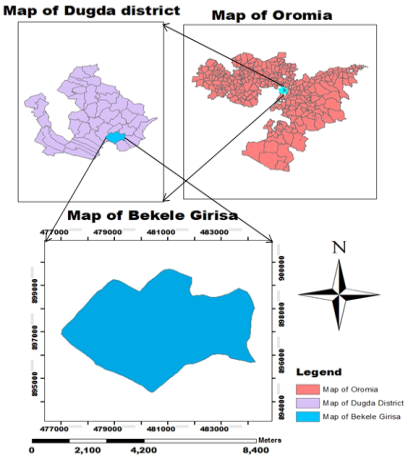
Figure 1. Map of Study Area.
Applying mulch is one of the highly beneficial practices of good soil management and retaining soil moisture . Mulching is primarily used to protect the soil surface from solar radiation, modify soil temperature, reduce evaporation, and increase soil moisture availability for crop growth, resulting in improved crop water-use efficiency and yield . Mulching conserve water and improve irrigation efficiency in agriculture, especially in the areas where water resources are limited and regulated. By promoting appropriate moisture and temperature conditions, mulch has helped producers boost crop production efficiency, and mulch has a large influence on the microclimate around the plant and the soil . Mulching, in combination with managed deficit watering, is likely to boost crop output. This method has been applied worldwide, particularly in areas with limited water availability, to improve crop productivity and water use efficiency. Straw mulch has been carried out in arid and semi-arid region to improve crop yields , 11, 31]. Wheat straw mulch reduced evaporation by 50% under winter wheat, and saved about 80 mm of water during wheat growing season .
In the study area, irrigation is applied on a routine basis, inadequate management of irrigation water and absence of scheduling has been an important limiting factor. However, the limited water availability is a challenge for expanding irrigation . Current irrigation-based agriculture is also facing difficulties due to the poor adoption of suitable water-saving technologies . Although a few studies were undertaken on the effect of mulching and furrow methods on crop yield and water productivity in different parts of Ethiopia , 38]. But the farmers generally lack knowledge on aspects of soil-water-plant relationships; they apply water to crop regardless of plant needs. Consequently, knowledge of irrigation application is when to irrigate, how much water to apply, and what level of stress is crucial to enhance crop production per unit water. On the other hand, under such existing condition, practicing of deficit irrigation and using water saving methods of furrow irrigation systems could help to increase agricultural production by expanding irrigable land with the given limited amount of water. However, the effects of irrigation levels and levels of wheat straw mulch on maize yield and water productivity are inadequate for the study area. The objectives of this research were to examine the effect deficit irrigation and levels of wheat straw mulch on yield and yield components and water productivity of maize.
2. Materials and Methods
2.1. Description of the Study Site
The experiment was conducted in Dugda district for 2 years, which is found in East Shewa zone of Oromia regional state. It is located at a distance of 130 km south of Addis Ababa on the main road of Addis Ababa to Hawassa. Geographically, it is located between 38°21’ E latitude and 7°18’ N longitude (Figure 1). The altitude of the study area ranges from 1500 to 1926 m above sea level.
2.2. Methods
The farmers were selected purposively based on their willingness and recommendation by district agricultural expert and Development agents (DAs) for conducting experiment. All experimental plots were ploughed three times by oxen before imposing any treatments. The BH-546 maize variety was used as testing crop. Based on previous recommendations of fertilizer application on maize by , 100 kg ha-1 Urea in two applications (50 kg ha-1 during sowing and another 50 kg ha-1 was applied 45 days after sowing) and 100 kg ha-1 of DAP in one application (only during sowing) were applied.
2.3. Experimental Design and Treatments
The experimental design had two (irrigation level and straw mulch) factors arranged in factorial Randomized Complete Block Design (RCBD) with three replications. The two factors were deficit irrigation and mulch levels. The deficit irrigation method has four levels (100%ETc, 85%ETc, 70ETc and 55%ETc), whereas three levels of mulch (no mulch, 3t/ha of wheat straw mulch and 5t/ha of wheat straw mulch). A total of 12 treatments were used. Each treatment was applied on a plot size of 6m x 5m (30m2) separated by a distance of 1.5 m between blocks and 1 m within plots. The spaced between row and plant was 75 and 30 cm respectively.
Table 1. Treatments Arrangements.

T1=100% ETC with no mulch

T7=85% ETC +3ton/ha of wheat straw mulch

T2=85% ETC with no mulch

T8=85% ETC +5ton/ha of wheat straw mulch

T3=70% ETC with no mulch

T9=70% ETC +3ton/ha of wheat straw mulch

T4=55% ETC with no mulch

T10=70% ETC +5ton/ha of wheat straw mulch

T5=100% ETC +3ton/ha of wheat straw mulch

T11=55% ETC +3ton/ha of wheat straw mulch

T6=100% ETC +5ton/ha of wheat straw mulch

T12=55% ETC +5ton/ha of wheat straw mulch

2.4. Determination of Crop Water Requirement
The daily reference evapotranspiration (ETo) was calculated by CROPWAT 8.0 software using the daily FAO Penman-Monteith method . The daily climatic parameters that were used to estimate ETo such as maximum temperature, minimum temperature, relative humidity, wind speed (at two meter) and sunshine hour was collected from nearest meteorological station adjacent to the experimental site. The maize crop evapotranspiration (ETc) for each day was computed by multiplying the ETo by the crop coefficient (Kc) values obtained from FAO [19] for each of the four stages of maize viz., initial, development, mid and late season. FAO Penman-Monteith method was used for determining reference crop evapotranspiration (ETo). The Penman-Monteith equation is given by equation:
ETo=0.408Rn-G+γ900T+273U2(es-ea)+γ(1+0.34U2)
Where:-
ETo = Reference evapotranspiration (mm/day), Rn = Net radiation at the crop surface (MJ/m2 per day), G = Soil heat flux density (MJ/m2 per day), T = Mean daily air temperature at 2 m height (°C), U2 = Wind speed at 2 m height (m/sec), es = Saturation vapor pressure (kPa), ea = Actual vapor pressure (kPa), es - ea = Saturation vapor pressure deficit (kPa), ∆ = Slope of saturation vapor pressure curve at temperature T (kPa/°C), γ = Psychrometric constant (kPa/°C).
Crop water requirement (ETc) was calculated from climatic data by directly integrating the effect of crop characteristics into reference crop evapotranspiration. Experimentally determined ratios of ETc and ETo, called crop coefficients (Kc), are used to relate ETc to ETo as given by equation:
ETC = Kc x ETo
Where: - ETc is the daily crop water requirement (mm/day), ETo is daily reference evapotranspiration (mm/day) and Kc is the crop coefficient.
Irrigation Requirement (IR) can be estimated from the expression:
IR = CWR - Effective rainfall
Where: - IR in mm, CWR in mm and effective rainfall which is part of the rainfall that entered into the soil and made available for crop production in mm.
The effective rainfall was estimated using the method given in CROPWAT software using dependable rain (FAO formula).
Peff=0.6×P-10 for month70 mm
Peff=0.8×P-24 for month>70mm
Where:-
P is rainfall in mm and Peff is effective rainfall in mm.
Total Available Water (TAW) was be derived from field capacity (Fc) and permanent wilting point (PWP);
TAW=FC-PWP100×(ρb×Dz)
Where: - TAW is total available water in mm per root depth of soil, FC and PWP in% on weight basis ρb is the bulk density of the soil in g/cm3, and Dz is the root zone depth in mm.
Irrigation schedule, when to irrigate and how much water to apply per irrigation, is one of the most important tools for best management of irrigated agriculture. Irrigation schedule was worked out using CropWat 8 windows. In the model, one of the computation methods for the optimal irrigation scheduling for no yield reduction is the irrigation given at 100% readily available soil moisture depletion to refill the soil to its field capacity. The irrigation schedule was done based on readily available water (RAW), the amount of water that crops can extract from the root zone without experiencing any water stress and computed as:
RAW=TAW* P
Where: - RAW in mm (represents the amount of water apply in the 100%ETc, p is in fraction for allowable/permissible soil moisture depletion for no stress (p) of 0.5 for maize.
The depth of irrigation supply at any time was obtained from a simplified water balance equation which is expressed as:
NIR=ETc-Re
Where: - NIR is net irrigation requirement (mm), ETc is the crop water requirement (mm) and Pe is the effective rainfall (mm).
Intervaldays=RAWCWR
Where: - RAW in mm and CWR in mm day-1
The gross irrigation requirement was obtained from the following equation:
IRg=IRnEa
Where: - where IRg = gross irrigation requirement (mm), IRn = net irrigation requirement (mm), Ea = application efficiency (%). Furrow irrigation application efficiency of 60% was used in this study.
The gross irrigation finally applies to each experimental plot based on the treatments proportion. Volume of water applies for every treatment was determined by multiplying plot area with the depth of gross irrigation requirement.
Time required to irrigate each treatment was calculated from the ratio of volume of water applied to the discharge-head relation of 3-inch Parshall flume. The time required to deliver the desired depth of water into each plot was determined using the following equation.
t=d*w*l6*Q
Where:-d is gross depth of water to be applied (cm), t is application time (min), l is furrow length (m), w is furrow spacing (m), 6 is time conversion factor into minute and Q is flow rate of discharge (l/s).
2.5. Data Collection and Analysis
2.5.1. Climatic Data
The secondary data such as maximum and minimum air temperature, relative humidity, wind speed, sunshine hours, and rainfall data of 30 years were collected from Meki station for computing reference evapotranspiration (ETo) according to the FAO Penman-Monteith method, Crop water requirement (ETc) using the CROPWAT8 model.
2.5.2. Soil Data
The disturbed and undisturbed composite soil sample before planting from each treatment at a depth of 0-30cm, 30-60 cm, and 60-90cm was collected and analyzed for different soil physio-chemical properties like soil texture, pH, Total Nitrogen (TN), organic carbon (OC), Field capacity (FC), permanent wilting point (PWP) and bulk density (ρb) at soil laboratory. Field capacity and permanent wilting points was considered at 0.3 and 15.0 bars, respectively [29]. The soil texture was determined by the Boycouos hydrometer method for analyzing soil particle size distribution and the textural class was classified using USDA textural triangle. Thus, the necessary analyzed soil data was used as input for the CROPWAT model.
2.5.3. Soil Infiltration Rate
Before the experimental work is started, test of soil infiltration was conducted using double ring infiltrometer and infiltration rate was determined to use the results as inputs for CROPWAT8 for irrigation scheduling. The soil infiltration rate was determined in the field using double-ring infiltrometer method as described by . The experiments were done randomly at particular point in the experimental site. Infiltration measurement was taken continuously up to constant value is reached and the depth of water levels infiltrated was measured.
I. Bulk density
Bulk density was determined by the core method for each depth. It express as follows:
ρb=MsVs
Where:- ρb= bulk density (g/cm3), Ms = dry weight of the soil (g) and Vs = volume of the soil in the core (cm3).
Water productivity (WP)
Water productivity (WP) was determined by dividing the total yield to the net amount of irrigation water applied to the crop as indicated by the following equation :
WP=YETC
Where: - WP is water use efficiency (Kg/m3), Y is total yield per unit area (Kg/ha), ETc = the seasonal crop water consumption by evapotranspiration (m³/ha).
Saved irrigation water: was calculated from gross irrigation and water used by the crop for each treatment. m3.
Saved irrigation water =Gross irrigation (m3) - Crop water use (m3)
Additional area to be cultivated from saved water was calculated as:-
Additional area to be cultivated (AAC)=Water saved (m3)Gross irrigation(m3ha)
Where, kg is Kilogram, and ha is hectare.
Additional yield due to additional area: was calculated from additional area to be cultivated due to saved water and total yield.
Additional yield due to additional area(Qtha)=AACha*total yield (kgha)100
Where, kg is kilogram, ha is hectare, AAC is additional area to be cultivated and Qt is quintal.
Relative yield reduction (RYR) (%) was calculated using the following equation:-
RYR%=YFI-YDIYFI*100
Where: - RYR is percent of yield increase or decrease due to deficit irrigation, YFI is yield in (kg/ha) obtained from full irrigation and YI/D is yield in (kg/ha) obtained from deficit irrigation.
2.5.4. Agronomic Data Collection
The yield and yield components (plant height, cob length, cob width, 1000% seed weight) and water productivity data were collected. The necessary data were collected from central two rows.
2.6. Partial Budget Analysis
To assess the costs (like cost for water pricing, seed, fertilizer, chemicals, labor) and benefits associated with mulch materials the partial budget techniques as described by was applied on the yield result. The net benefit (NB) was calculated by subtracting total variable cost (TVC) from Gross benefit (GB) as follows:
NB = GB - TVC
2.7. Data Analysis
The data was subject to analysis of Variance (ANOVA). The SAS 9.2 was used for analysis to compare the effects of the treatments on yield and yield component of maize and water productivity. Mean separation least significant difference (LSD) was used to compare and separate treatment means at 5% probability level.
3. Results and Discussions
3.1. Selected Physico-chemical Properties
3.1.1. Selected Soil Physical Properties
Table 2. Results of Selected Soil Physical Properties.

Soil properties

Soil depth (cm)

Mean

0-30

30-60

60-90

Sand (%)

62

70

76

69.33

Silt (%)

22

16

14

17.33

Clay (%)

16

14

10

13.33

Textural class

Sandy loam

Sandy loam

Sandy loam

Sandy loam

Bulk density (gcm-3)

1.18

1.26

1.31

1.25

FC (%)

24.0

19.2

15.6

19.60

PWP (%)

16.1

10.3

10.5

12.30

TAW (mmm-1)

93.22

112.14

66.81

91.25

The average result of the selected soil physical properties of experimental site showed that the compositions of sand, silt and clay percentage were 69.33%, 17.34% and 13.33%, respectively. Thus, according to USDA soil textural classification, the soil of experimental site was classified as sandy loam soil. The fluctuation in bulk density with soil depth was observed at the experimental location (Table 2). The upper soil layer (0–30 cm) had a lower bulk density (1.22 g cm−3) than the subsurface soil, which might be because of the topsoil’s comparatively greater organic matter content. It fluctuated between 1.18-1.31 gcm-3 and average bulk density of the experimental soil was found to be 1.25 gcm-3. According to , the bulk density values were generally within the ideal range for the best possible air and water flow in the soil to support crop root development. The field capacity, permanent wilting point and total available water (TAW) of the soil were 19.60%, 12.3%, and 91.25mm/m, respectively for study area (Table 2).
3.1.2. Selected Soil Chemical Properties
The soil’s pH varied from 7.5 to 7.7, according to the results of the chemical analysis of the soil (Table 3). Based on the soil response (pH) assessment , the research area’s soil is categorized as moderately alkaline (7.1-8.5), and the pH exhibited an increasing trend with soil depth up to 90cm. From Table 3, the pH of the experimental site through the analyzed soil was found to be in recommended range of pH soil with average value of 7.60. The electrical conductivity of the experimental soil is non-saline, ranging from 0.06 to 0.1 dS/m and the average value 0.07ds/m (Table 3). This suggests that the soil is appropriate for growing crops . It is discovered to be appropriate for irrigation as well. The organic carbon (OC) ranged from 0.37% to 0.97% and the average value is 0.62% (Table 3). The upper soil layer had the highest amount of organic carbon, whereas the bottom layer had the lowest amount. Consequently, it was discovered that the site’s soil had relatively little organic carbon (OC), necessitating ongoing amendment with different organic inputs. The total nitrogen measured from the experimental field varied from 0.03 to 0.08%. The result experimental site closed to reports, which stated that the rating system for soil TN, the experimental soil had a low level of total nitrogen (0.05– 0.12%), suggesting that the nutrient is a limiting factor for the best possible crop development. The cation exchange capacity (CEC) ranged from 18.7 to 32.7 and the average value is 20.05 (Table 3).
Table 3. Results of Selected Soil Chemical Properties.

Soil properties

Soil depth (cm)

Mean

0-30

30-60

60-90

PH-water (1:2.5)

7.5

7.6

7.7

7.60

EC (ds/m)

0.10

0.05

0.06

0.07

CEC

32.7

18.7

21.4

20.05

OC (%)

0.97

0.51

0.37

0.62

TN (%)

0.08

0.05

0.03

0.05

3.2. Crop Water Requirement and Additional Area to Be Cultivated by Saved
The net and gross irrigation water applied in the entire growing period of the crop for all the treatments are shown in Table 4. The amount of irrigation water applied to treatments of 100% ETc, 100% ETc with 3 t/ha of straw mulch and 100% ETc with 5t/ha of straw mulch, 85% ETc, 85% ETc with 3 t/ha of straw mulch and 85% ETc with 5t/ha of straw mulch, 70% ETc, 70% ETc with 3 t/ha of straw mulch and 70% ETc with 5t/ha of straw mulch and 55% ETc, 55% ETc with 3 t/ha of straw mulch and 55% ETc with 5t/ha of mulch were 480.9, 408.8, 336.7 and 264.5mm of crop water requirement and 801.6, 681.3, 561.1 and 440.9 mm gross irrigation respectively (Table 4).
Table 4. Crop and Irrigation Water Requirement and Addional Area to be Cultivated by Saved Water.

Treatments

IRn (mm)

Pef (mm)

CWR (mm)

IRg (mm/m)

IRg (m3/ha)

Rws

AAC (ha)

mm

(m3)

(%)

100% ETc

480.9

0.0

480.9

801.6

8016

0.0

0.0

0.0

0.0

100% ETc*3t/ha

480.9

0.0

480.9

801.6

8016

0.0

0.0

0.0

0.0

100% ETc*5t/ha

480.9

0.0

480.9

801.6

8016

0.0

0.0

0.0

0.0

85% ETc

408.8

0.0

408.8

681.3

6813

120.2

1202.4

15.0

0.18

85% ETc * 3t/ha

408.8

0.0

408.8

681.3

6813

120.2

1202.4

15.0

0.18

85% ETc * 5t/ha

408.8

0.0

408.8

681.3

6813

120.2

1202.4

15.0

0.18

70% ETc

336.7

0.0

336.7

561.1

5611

240.5

2404.7

30.0

0.43

70% ETc * 3t/ha

336.7

0.0

336.7

561.1

5611

240.5

2404.7

30.0

0.43

70% ETc * 5t/ha

336.7

0.0

336.7

561.1

5611

240.5

2404.7

30.0

0.43

55% ETc

264.5

0.0

264.5

440.9

4409

360.7

3607.1

45.0

0.82

55% ETc * 3t/ha

264.5

0.0

264.5

440.9

4409

360.7

3607.1

45.0

0.82

55% ETc * 5t/ha

264.5

0.0

264.5

440.9

4409

360.7

3607.1

45.0

0.82

IRn=net irrigation requirement, IRg=gross irrigation requirement, CWR=crop water requirement, Pef=effective rainfall and Rws=relative water saved, AAC= Additional area to be cultivated by saved water
Relatively 15% of water was saved under treatments of 85% ETc, 85% ETc with 3 t/ha of straw mulch and 85% ETc with 5t/ha of straw mulch, 30% of water saved under of 70% ETc, 70% ETc with 3 t/ha of straw mulch and 70% ETc with 5t/ha of straw mulch% ETc and 45% of water saved under 55% ETc, 55% ETc with 3 t/ha of straw mulch and 55% ETc with 5t/ha of straw mulch (Table 4). The variation of net and gross irrigation requirement occurred between the treatments were due to deficit application.
Additional area to be cultivated by saved water under treatments of 85% ETc, 85% ETc with 3 t/ha of straw mulch and 85% ETc with 5t/ha of straw mulch, 70% ETc, 70% ETc with 3 t/ha of straw mulch and 70% ETc with 5t/ha of straw mulch% ETc and 55% ETc, 55% ETc with 3 t/ha of straw mulch and 55% ETc with 5t/ha of straw mulch were 0.18ha, 0.43 ha and 0.82 ha respectively (Table 4). The variation occurred between the treatments were due to deficit application.
3.3. Effect of Irrigation Levels and Levels of Wheat Mulch on Yield, Yield Components and Water Productivity
3.3.1. Plant Height
Statistically there was no significant difference (p ≤ 0.05) between the treatments on plant height. The highest plant height (209.80cm) was recorded from the treatment of 100%ETc*5t/ha of wheat straw mulch followed by 100%ETc*3t/ha of wheat straw mulch (204.47 cm) (Table 5). Whereas, a minimum plant height (193.53cm) was observed from the treatment of 55% ETc without mulch (Table 5). Moreover, the mulching with 100%ETc*5t/ha of wheat straw mulch improved plant height by 5.87% than 55% ETc with no mulching. This might be due to wheat straw mulch conserve the adequate soil moisture through reducing evaporation. In addition, the highest plant height may have resulted from vegetative growth that was encouraged by sufficient moisture and its conservation. Similar findings were reported by , who stated that the plant height of maize was increased by 11.2% with plastic mulch when compared with no mulch condition. All deficit irrigation treatments with mulch, when it came to plant height, often resulted in higher plants than the corresponding deficit irrigation treatments without mulch. The average value of plant height has demonstrated a declining trend in plant height with decreasing water application. This result in line with who reported that growing plant height with proper depth of irrigation and straw mulching also reflects the positive effects of water in sustaining the turgor pressure of the cell which is the key prerequisite for growth. , 44, 35], reported that different mulching condition significantly affected plant height and yield of maize which agreed with this finding. Similarly, expected plant height to be greater with full irrigation (100% ETc) and lower with deficit irrigation applied throughout the crop growing season. In addition, this result in line with who reported that treatments mulch with straw plants received more soil moisture and good aeration which might promote vegetative growth resulting in the maximum growth components.
3.3.2. Cob Length
Statistically there was significant difference (p ≤ 0.05) between the treatments on cob length. There was no significant difference between 100%ETc*3t/ha, 85%ETc*5t/ha and 85%ETc*3t/ha of wheat straw mulch on cob length (Table 5). The highest cob length (20.20cm) was recorded from the treatment of 100%ETc*5t/ha followed by 85%ETc*5t/ha of wheat straw mulch (19.28cm) (Table 5). Whereas, the minimum cob length (17.38cm) was obtained from the treatment of 55% ETc with no mulch (Table 5). On the other hand, the minimum cob length observed at no mulch condition was significantly inferior to straw mulch. Moreover, the mulching with 100%ETc*5t/ha of wheat straw mulch improved cob length by 13.96% than 55% ETc with no mulch. This might be due to highest soil moisture content in the root zone due to mulching which leads to favorable growth condition. This leads to improve growth parameters. On the other hand, application of deficit irrigation might lead to create unfavorable growth condition on maize. Different studies also had shown that different mulching level affects different growth and yield components of maize. This might be mulching improve moisture content of soil through reduction of evaporation and save water in the root zone. Similar findings were reported by who reported mulching improves maize growth parameters including cob length.
3.3.3. Cob Diameter
Statistically there was a significant difference (p ≤ 0.05) between the treatments on cob diameter. The highest cob diameter (4.97cm) was recorded from the treatment of 100%ETc*5t/ha followed by 85%ETc*3t/ha of wheat straw mulch (4.90cm) (Table 5). Whereas, the minimum cob diameter (4.55cm) was recorded from the treatment of 55% ETc with no mulch (Table 5). On the other hand, the minimum cob diameter observed at no mulch condition was inferior to straw mulch. Moreover, the mulching with 100%ETc*5t/ha of wheat straw mulch improved cob diameter by 8.45% than 55% ETc with no mulch. This might be due to highest soil moisture content in the root zone and high straw mulch which leads to favorable growth condition. This leads to improve growth parameters like plant height, cob length and cob diameter. On the other hand, application of deficit irrigation might lead to create unfavorable growth condition on maize. Different studies also revealed that different mulching level affects different growth and yield components of maize. This might be mulching improve moisture content of soil through reduction of evaporation and save water in the root zone. Similar findings were reported by who reported mulching improves maize growth parameters including cob diameter.
3.3.4. Thousand Seeds Weight
Statistically there was significant difference (p ≤ 0.05) between the treatments on thousand seeds weight. The highest thousand seeds weight (537.50gm) was recorded from the treatment of 100%ETc*5t/ha of wheat straw mulch over the others followed by the treatment of 85%ETc*5t/ha of wheat straw mulch (456.67gm) (Table 5). Whereas, a minimum thousand seed weight (312.50gm) was recorded from the treatment of 55% ETc without mulch (Table 5). Thus, as deficit watering has increased and straw mulch levels have decreased, there has been a tendency toward a decrease in thousand seeds weight. This implied that mulching improve thousands seeds weight by reducing evaporation losses. Moreover, mulching with 100%ETc*5t/ha of wheat straw mulch improved thousand seeds weight by 41.86% than 55% ETc with no mulch (Table 5). This result in lined with reported that plastic mulch increases maize biomass by 73.5% as compared to no mulch. In fact, the seeds which were supplied with adequate moisture did mature well to have heavier seed weight than applying without mulch or deficit irrigation.
3.3.5. Yield
Statistically there was significant difference (p ≤ 0.05) between the treatments on the yield. The highest (65.40 Qtha-1) yield was recorded from the treatment of 100%ETc*5t/ha over the others followed by the treatment of 100%ETc*3t/ha of wheat straw mulch (59.98 Qtha-1) (Table 5). Whereas, a minimum yield (43.20 Qtha-1) was recorded from the treatment of 55% ETc without mulch (Table 5). Thus, the treatment that got 55% ETc and no mulch showed the largest yield drop (33.94%), whereas 100% ETc and 5 t/ha showed the lowest yield reduction as compared to others (Table 5). This may attributed to optimum soil water-air-balance around plant root zone. Thus, as deficit watering has increased and straw mulch levels have decreased, there has been a tendency toward a decrease in yield. This implied that mulching improve yield by reducing evaporation losses. In fact, the seeds which were supplied with adequate moisture did mature well to have heavier yield than applying without mulch or deficit irrigation. On other hand, the grain yield of the experiment was proportional to the availability of water and level of mulching, but as stress intensity increased and level of mulching decreased the grain yield also decreased. This result agreed with who stated that mulch increased the grain yield of maize, which is mainly due to the effect of mulch reducing water evaporation from soil. In addition, this result in lined with , 43, 17] who reported that maximum yield obtained under mulch treatment as compared to no mulch. Furthermore, the , 26, 42, 8], reported that grain yield was affected by irrigation water amount. This result in lined with who reported that treatment that got 50% ETc and no mulch showed the largest yield drop (62.30%), whereas the 100% ETc and 6 t/ha showed the lowest yield reduction. This might be due to mulching improving the moisture content of soil through the reduction of evaporation and saving water in the root zone.
3.3.6. Water Productivity
Statistically there was significant difference (p ≤ 0.05) between the treatments on the water productivity. The highest water productivity (1.10kgm-3) was recorded from the treatment of 55%ETc*5t/ha of wheat straw mulch and statistically superior over the other treatments followed by the treatment of 55%EcC*3t/ha (1.05 Kgm-3) (Table 5). Whereas, a minimum water productivity (0.62 Kgm-3) was observed from the treatment of 100% ETc (control) without mulch (Table 5). Moreover, the mulching with 55%ETc*5t/ha of wheat straw mulch improved water productivity by 43.63% than 100% ETc with no mulch (Table 5). Besides maize water productivity, the water use efficiency was enhanced due to application of straw mulch when combined with sufficient application of water as it leads to higher grain yield with the lower irrigation water application through conserving soil moisture. The effect of mulching on water use efficiency was significantly pronounced under deficit irrigation system.
This finding in line with who reported that maize water use was increased by 53.3% in black plastic mulch than non-mulch condition with alternative ridge and furrow method, respectively. In addition, this finding is in line with the study of , who reported that water consumption efficiency was much larger for mulched than un-mulched treatments even at full irrigation (100% ETc). Furthermore, reported that the water productivity was affected by irrigation level and water use efficiency decreased with increasing water supply and reduction of yield. In fact, the seeds which were supplied with adequate moisture did mature well to have heavier yield than applying without mulch or deficit irrigation. This result in line with , 14, 34] who reported that that water productivity ranged from 0.41 to 2.71kg m-3, which agrees with this finding. The present research’s findings are consistent with a study by , which shown that organic mulches outperformed the control in terms of evaporation reduction and yield increase.
Table 5. Effects of Irrigation Levels and Mulching on Yield, Yield Components and Water Productivity.

Treatments

Plant height (cm)

Cob length (cm)

Cob diameter (cm)

1000 seeds weight (gm)

Yield (Qtha-1)

WP (Kgm-3)

100%ETc

183.84

18.00cd

4.73cde

371.67bc

50.08cde

0.62f

85%ETc

183.60

17.68d

4.65def

335.83c

46.94de

0.69def

70%ETc

182.45

17.43d

4.58ef

327.50c

43.88e

0.78cde

55%ETc

177.37

17.38d

4.55f

312.50c

43.20e

0.98ab

100%ETc*3t/ha

187.50

18.78bc

4.87abc

377.50bc

59.98ab

0.88bc

100%ETc*5t/ha

188.43

20.20a

4.97a

537.50a

65.40a

0.82cd

85%ETc*3t/ha

183.60

18.93bc

4.83abc

390.83bc

54.32bcd

0.68ef

85%ETc*5t/ha

186.90

19.28ab

4.90ab

456.67ab

56.25bc

0.83cd

70%ETc*3t/ha

183.83

18.22cd

4.77bcd

358.33c

47.90ecd

0.86bc

70%ETc*5t/ha

186.20

18.75bc

4.80bcd

363.33bc

50.23ecd

0.90bc

55%ETc*3t/ha

181.27

17.92cd

4.67def

342.50c

46.20ecd

1.05a

55%ETc*5t/ha

184.47

18.15cd

4.72cde

340.00c

48.35ed

1.10a

LSD(0.05)

NS

1.04

0.15

93.66

8.51

0.14

CV (%)

7.54

4.89

2.79

21.54

14.43

13.84

Means followed by the same letter(s) are not significantly different from each other at 5% level of significance, LSD (0.05) = Least Significance Difference at 5% and CV (%) = Coefficient of Variation.
3.4. Partial Budget Analysis, Relative Yield Reduction and Additional Yield Obtained from Saved Water
The highest (61,945birr/ha) net benefit was recorded from the treatments of 100% ETc*5t/ha of wheat straw mulch (Table 6). Whereas, the minimum (43,838birr/ha) net benefit was recorded from the treatments of 55% ETc*5t/ha of wheat straw with mulch (Table 6). According to, the selection criterion for economic viability of irrigation techniques is B/C ratio. If the B/C<1, implies that the benefit is not economically viable. The application of straw mulch is found to be economically and ergonomically feasible . This result showed that applying irrigation with 100% ETc*5t/ha of wheat straw mulch are economically feasible for maize production in the Dugda district of East Shewa zone.
The highest and minimum additional yield produced by saved water were obtained from the treatments of 55%ETc*5t/ha and full (100%ETc) irrigation with or without mulching respectively (Table 6). In addition, the highest and minimum relative yield reduction were obtained from treatments of 55% and 100%ETc*5t/ha respectively (Table 6). The highest and minimum net benefit obtained from saved irrigation water were recorded under treatments of 55%ETc*5t/ha of wheat straw mulch and full (100%ETc) irrigation with or without mulching respectively (Table 6).
Table 6. Partial Budget Analysis, Relative Yield Reduction, Additional Yield Produced by Saved Water, Net Return from Saved Water and of Maize Production.

Treatments

UTY(kg/ha)

ATY(kg/ha)

TVC (birr/ha)

GB (birr/ha)

NB (birr/ha)

AYsw (Qt)

NRws (birr)

RYR(%)

100%ETc

5008.0

4507.2

76216

130236

54020

0

0

23.43

85%ETc

4694.0

4224.6

74750

121512

46762

8.28

22366

28.23

70%ETc

4387.0

3948.3

63123

112957

49834

18.80

50764

32.92

55%ETc

4020.0

3618.0

60326

107808

43838

35.35

95433

33.94

100%ETc*3t/ha

5998.0

5398.2

98368

154601

56233

0

0

8.29

100%ETc*5t/ha

6540.0

5886.0

105994

167939

61945

0

0

0.00

85%ETc*3t/ha

5430.0

4887.0

85895

139623

53729

9.58

25872

16.97

85%ETc*5t/ha

5630.0

5060.7

92474

144373

51899

9.92

26792

14.02

70%ETc*3t/ha

4786.0

4307.4

73404

122776

49372

20.51

55381

26.82

70%ETc*5t/ha

5023.0

4520.7

80115

128608

48493

21.53

58123

23.20

55%ETc*3t/ha

4833.0

4349.7

62137

115191

53054

37.80

102060

29.36

55%ETc*5t/ha

4620.0

4158.0

68776

120432

51657

39.54

106765

26.10

TVC= Total variable cost, UTY= Unadjusted total yield, ATY= Adjusted total yield, GB= Gross benefit, NB =Net benefit, RYR=Relative yield reduction, NRsw = net return from saved water, AYsw =Additional Yield produced by saved water, Field price of water and current price of maize was 1 birr/238 m3 (Mekonen et al., 2015) and 27 birr/kg respectively.
4. Conclusions and Recommendation
The effect of irrigation and mulching levels were evaluated on yield, and yield components and water productivity. Based on the evaluation, the findings of this experiment revealed that the irrigation and levels of mulch significantly affected cob length, cob diameter, thousand seed weight, yield and water productivity of maize. The highest plant height, cob length, cob diameter, thousand seed weight and yield of maize were obtained from the treatment of 100% ETc with 5t/ha of wheat straw mulch. The minimum plant height, cob length, cob diameter, thousand seed weight and yield of maize were obtained from the treatment of 55% ETc with no mulch. Moreover, application of straw mulch leads to significantly higher on yield and yield components of maize than no mulching condition.
The highest water productivity and minimum water productivity were recorded from the 55%ETc*5t/ha and 100%ETc with no mulch respectively. The mean of highest and minimum yield were recorded from the treatment of 100%ETc*5t/ha of wheat straw mulch and 55% ETc without mulch respectively over the others. The highest and minimum water productivity were recorded from the treatment of 55%ETc*5t/ha of wheat straw mulch and 100% ETc (control) with no mulch respectively over the others. The plot mulching with 100%ETc*5t/ha and 55%ETc*5t/ha of wheat straw mulch improved yield and water productivity by 33.94% and 43.63% respectively. Based on this study, optimum combination of straw mulch and optimum irrigation water were identified. The 100% ETc with 5t/ha of wheat straw mulch was superior in most parameter than others treatments followed by 100% ETc with 3t/ha and 85% ETc with 5t/ha of wheat straw mulch respectively.
The highest net benefit was recorded from the treatments of 100% ETc*5t/ha of wheat straw mulch followed by the treatments of 100% ETc*3t/ha of wheat straw mulch and the treatments of 85% ETc*5t/ha of wheat straw mulch respectively. Whereas, the minimum net benefit was recorded from the treatments of 55% ETc with no mulch. This result revealed that, applying irrigation with 100% ETc*5t/ha of wheat straw mulch followed by the treatments of 100% ETc*3t/ha of wheat straw mulch and 85% ETc*5t/ha of wheat straw mulch are economically feasible for maize production in the Dugda district of East Shewa zone.
Therefore, it could be concluded that the critical depth of water application for moisture stress area should not be below 85% ETc with 5t/ha of wheat straw mulch of full maize water requirement for obtaining relatively good grain yield with a better improvement on water productivity and economically viable in study area and similarly agro ecology. Nonetheless, the experiment was done in one location for two years, thus for getting convincing results conducting similar research over locations would be appropriate for the better recommendation.
Abbreviations

CEC

Cation Exchange Capacity

EC

Electric Conductivity

ETc

Crop Water Requirement

kg ha-1

Kilogram per Hectare

OC

Organic Carbon

Peff

Effective Rainfall

RYR

Relative Yield Reduction

T/ha

Ton per Hectare

TN

Total Nitrogen

Acknowledgments
First, I thank Almighty God for always being with me in all my endeavors and giving me endurance to complete this study. My specials thank goes to Oromia Agricultural Institute (IQQO) for financial support and Adami Tulu Agricultural Research Center for their valuable support during implementation. Lastly, but not list, I would like to thanks the staff of Irrigation, Drainage and Water Harvesting Engineering Research Team of Adami Tulu Agricultural Research Center and district agricultural expert and DAs for their contribution of the completion of this study. In addition, highly acknowledgement goes to farmers for proving the experimental field and interest to work with us.
Author Contributions
Dulo Husen: Conceptualization, Data curation, Formal Analysis, Funding acquisition, Investigation, Methodology, Project administration, Resources, Software, Supervision, Validation, Visualization, Writing – original draft, Writing – review & editing
Anbese Ambomsa: Data curation, Project administration, Supervision, Investigation, Methodology, Visualization
Zelalem Shelemew: Data curation, Investigation, Methodology, Supervision, Visualization
Conflicts of Interest
The authors declare no conflicts of interest.
References
[1] Abd El-Mageed, et., el-Samnoudi, I. M., Ibrahim, A. E.-A M., & Abd el Tawwab, A. R. (2018). Compost and mulching modulates morphological, physiological responses and water use efficiency in sorghum (bicolor l. Moench) under low moisture regime. Agricultural Water Management, 208, 1–15.
[2] Addis Hailu Demo & Kibebew Kibret Tsehai (2024) Effect of irrigation andmulch levels on growth and yield components, yield, and water use efficiency of hot pepper (capsicum annuum L) in Eastern Ethiopia, Cogent Food & Agriculture, 10: 1, 2347913,
[3] Allen R. G., Pereira, L. S., Raes, D., & Smith, M.(1998). Crop evapotranspiration: Guidelines for computing crop requirements. FAO Irrigation and Drainage Paper 56. FAO.
[4] Awal MA, Khan MAH (2000) Mulch induced eco-physiological growth and yield of maize. Pak J Biol Sci 3: 61-64.
[5] Belachew M. M. (2022). Evaluating the effects of deficit irrigation and mulch type on yield of onion and tomato and water productivity in Fogera, Ethiopia. International Journal of Research in Agricultural Sciences, 9(1), 36–48.
[6] Berihun, B. (2011). Effect of mulching and amount of water on the yield of tomato under drip irrigation. Journal of Horticulture and Forestry, 3(7), 200–206.
[7] Blake G R and KH Hartage. 1986. Methods of Soil Analysis: Bulck Density. 2nd ed. ed. Klute A. Madison Wisconsin USA: American society of agronomy Inc. and soil science society of America Inc. 363-375.
[8] Bosland, p. W., & peppers, V. e. J. (2000). Vegetable and spice capsicums. Cabi Bookshop, 2, 14-39.
[9] Bouwer H. 1986. Methods of Soil Analysis: Intake Rate in Cylinder Infiltrometer. 2nd ed. ed. Klute A. Madison Wisconsin USA: American society of agronomy Inc. and soil science society of America Inc. 825-843.
[10] Bouyoucos, G. J. (1962). Hydrometer method improved for making particle size analyses of soils 1. Agronomy Journal, 54(5), 464-465.
[11] Cai, T. Y., Jia, Z. K., Huang, Y. W., Huang, H. J., Meng, L, Yang, B. P. and Li, H. (2011). Effects of different straw mulch rates on soil water conservation and water-saving benefits in spring maize field. Transactions of the Chinese Society of Agricultural Engineering, 27: 238-243.
[12] Choudhary, V. K., Bhambri, M. C., pandey, n., & Sharma, h. G. (2012). effect of drip irrigation and mulches on physiological parameters, soil temperature, picking patterns and yield in capsicum (Capsicum annuum l.) Archives of Agronomy and Soil Science, 58(3), 277-292.
[13] Cimmity (International Maize and Wheat Improvement Center). (1988). from Agronomic Data to Farmer Recommendations: An Economics Training Manual. Completely Revised Edition. Mexico. D. F.
[14] Dagdelen N, Yilmaz E, Sezgin F, Gurbuz T (2006). Water-yield relation and water use efficiency of cotton (Gossypium Hirsutum L.) and second crop corn (Zea mays L.) in western Turkey. Agric Water Manage 82(1- 2): 63-85.
[15] Debelle T, Friessen D K (2001). Effect of enriching farmyard manure with mineral fertilizer on grain yield of maize at Bako, western Ethiopia. Seventh Eastern and Southern African Maize conference 11th -15th February. pp. 335-337.
[16] Dehkordi N, Farhadi R (2016) Mulch Treatment with Mulch Planter and its Effects on Maize Production. Agric Conspec Sci 80: 247-252.
[17] Dossou-Yovo, E. R., Ampofo, E., Igue, A. M., Sintondji, L. O., Jesse, N., Huat, J., Agbossou, E. K., Environnement, E., & Recherche, I. N. (2016). Improving soil quality and upland rice yield in northern Benin with no-tillage, rice straw mulch and nitrogen fertilization. 9(1), 117-131.
[18] FAO (2008). Food and agriculture organisation of the United Nations.
[19] FAO (1977). Food and Agriculture Organization of the United Nations. Laboratory Manual Food and Agriculture.
[20] FAO (Food and Agriculture Organization), 2002. Financial and economic appraisal of irrigation projects: Irrigation Manual Module 11. FAO, Harare.
[21] FAO. (1985). Water quality for agriculture. Food and agriculture organization of the United nations Rome.
[22] Food and Agricultural Organization (FAO). (2016). State of food and agriculture: Climate change. Agriculture and Food Security.
[23] Hunt, N., & Gilkes, R. (1992). Farm monitoring handbook.
[24] Illiassou, N., Leonor, R. S. and Raúl, S. C. 2014. Water use efficiency and water productivity in the Spanish irrigation district “Río Adaja”. International Journal of Agricultural Policy and Research, 2(12): 484-491.
[25] Kar G, Verma HN (2005) Phenology based irrigation scheduling and determination of crop coefficient of winter maize in rice fallow of Eastern India. Agric Water Manage 75(3): 169-183.
[26] Karasu, a., Kuşcu, h., Öz, M., & Bayram, G. (2015). The effect of different irrigation water levels on grain yield, yield components, and some quality parameters of silage maize (Zea mays indentata Sturt.) in Marmara region of Turkey. Notulae Botanicae Horti Agrobotanici Clujeană-Napoca, 43(1), 138-145.
[27] Kipkorir, E. C., Raes, D., & Labadie, J. (2001). Optimal allocation of short-term irrigation supply. Irrig. Drain Syst., 15, 247-267.
[28] Kirda C. 2002. Deficit Irrigation Scheduling Based on Plant Growth Stages Showing Water Stress Tolerance. Water Reports,(FAO): 3-10.
[29] Klute, A., and C. Dirksen. (1986). Hydraulic conductivity and diffusivity: Laboratory.
[30] Leskovar, D. (2010). Scientists Complete Two-Year Study on Short-Day Onions. Science Daily 2010.
[31] Li, R., Hou, X. Q., Jia, Z. K., Han, Q. F. and Yang, B. P. (2012). Effects of rainfall harvesting and mulching technologies on soil water, temperature, and maize yield in Loess Plateau region of China. Soil Research, 50: 105-113,
[32] Liu, Y., Li, S. Q., Chen, F. and Yang, S. J. and Chen, X. P. (2010). Soil water dynamics and water use efficiency in spring maize (Zea mays L.) fields subjected to different water manag-ement practices on the Loess Plateau, China. Agricultural Water Mg’t, 97: 769-775.
[33] Mansouri, C., Modarres, S. A., & Saberali, S. F. (2010). Maize yield response to deficit irrigation during low-sensitive growth stages and nitrogen rate under semiarid climatic conditions. Agricultural Water Management, 97(1), 12-22.
[34] Mengü GP, Ozgürel M (2008). Evaluation water-yield relations in maize (Zea mays L.) in Turkey. Pak J Biol Sci 11(4): 517-524.
[35] Meskelu E, Tesfaye H, Debebe A, Mohammed M (2018) Integrated Effect of Mulching and Furrow Methods on Maize Yield and Water Productivity at Koka, Ethiopia. Irrigat Drainage Sys Eng 7: 207.
[36] Mo F, Wang JY, Li FM, Nguluu SN, Ren HX, et al. (2017) Yield-phenology relations and water use effciency of maize (Zea mays L.) in ridge-furrow mulching system in semiarid east African Plateau. Scientifc Reports 7: 3260.
[37] Mubarak, I. (2020). Improving water productivity and yield of onion crop by combining early planting and straw mulch under different irrigation levels in dry Mediterranean region. Advances in Horticultural Science, 34(1), 49-60.
[38] Mulugeta and Kannan. 2015. Effect of Deficit Irrigation on Maize under Conventional, Fixed and Alternate Furrow Irrigation Systems at Melkassa, Ethiopia. International Journal of Engineering Research & Technology.
[39] Nikolaou, G., Neocleous, D., Christou, A., Kitta, E., & Katsoulas, N. (2020). Implementing sustainable irrigation in water-scarceregions under the impact of climate change. Agronomy, 10(8), 1120.
[40] Pereira, L. S., T. Oweis and A. Zairi, 2002. irrigation management under scarcity. Agricultural Water Management, 57: 175- 206.
[41] Ramada, S., & Ramanathan, S. p. (2017). evaluation of drip fertigation in aerobic rice-onion cropping system. International Journal of Current Microbiology and Applied Sciences, 6(4), 2623-2628.
[42] Robel, Admasu, Abraham W Michael, Tilahun Hordofa (2019). Effect of Moisture Stress on Maize (Zea Mays L.) Yield and Water Productivity. Int J Environ Sci Nat Res. 16(4): 555945.
[43] Sadek, I. I., Youssef, M. a., Solieman, n. Y., & alyafei, M. a. M. (2019). Response of soil properties, growth, yield and fruit quality of cantaloupe plants (Cucumis melo l.) to organic mulch. Merit Res. J. Agric. Sci. Soil Sci, 7(9), 106-122.
[44] Singh G, Joshi VK, Chandra S, Bhatnagar A, Dass A (2016) Spring maize (Zea mays L.) response to different crop establishment and moisture management practices in north-west plains of India. ROC 17.
[45] Tadesse B., Tilahun Y., Bekele T., Mekonen G. (2021). Heliyon Assessment of challenges of crop production and marketing in Bench-Sheko, Kaffa, Sheka, and West-Omo zones of southwest Ethiopia. Heliyon, 7, Article 07319.
[46] Tadesse, et. al. (1991). Soil, plant, water, fertilizer, animal manure\& compost analysis manual.
[47] Vincent-Caboud L, Vereecke L, Silva E, Peigné J (2019). Cover Crop Effectiveness Varies in Cover Crop-Based Rotational Tillage Organic Soybean Systems Depending on Species and Environment. Agronomy 9: 319.
[48] Wang, X. and Xing, Y (2017). Effects of mulching and nitrogen on soil nitrate-N distribution, leaching and nitrogen use efficiency of maize (Zea mays L.). PLoS one, 11(8): 1371-1376.
[49] Yadeta B., Ayana M., Yitayew M., Hordofa T. (2022). Performance evaluation of furrow irrigation water management practice under Wonji Shoa Sugar Estate condition, in Central Ethiopia. Journal of Engineering and Applied Science, 69(1), Article 21.
[50] Yemane et, al. (2019). Effect of different type of mulching and furrow irrigation methods on maize (zea mays l.) yield and water productivity at raya valley, northern Ethiopia. Journal of Journal of Biology, Agriculture and Healthcare, 20(9).
Cite This Article
  • APA Style

    Husen, D., Ambomsa, A., Shelemew, Z. (2025). Effects of Irrigation and Mulching Levels on Yield, Yield Component and Water Productivity of Maize in Dugda District, East Shewa Zone of Oromia. Research and Innovation, 2(1), 72-84. https://doi.org/10.11648/j.ri.20260201.19

    Copy | Download

    ACS Style

    Husen, D.; Ambomsa, A.; Shelemew, Z. Effects of Irrigation and Mulching Levels on Yield, Yield Component and Water Productivity of Maize in Dugda District, East Shewa Zone of Oromia. Res. Innovation 2025, 2(1), 72-84. doi: 10.11648/j.ri.20260201.19

    Copy | Download

    AMA Style

    Husen D, Ambomsa A, Shelemew Z. Effects of Irrigation and Mulching Levels on Yield, Yield Component and Water Productivity of Maize in Dugda District, East Shewa Zone of Oromia. Res Innovation. 2025;2(1):72-84. doi: 10.11648/j.ri.20260201.19

    Copy | Download

  • @article{10.11648/j.ri.20260201.19,
      author = {Dulo Husen and Anbese Ambomsa and Zelalem Shelemew},
      title = {Effects of Irrigation and Mulching Levels on Yield, Yield Component and Water Productivity of Maize in Dugda District, East Shewa Zone of Oromia},
      journal = {Research and Innovation},
      volume = {2},
      number = {1},
      pages = {72-84},
      doi = {10.11648/j.ri.20260201.19},
      url = {https://doi.org/10.11648/j.ri.20260201.19},
      eprint = {https://article.sciencepublishinggroup.com/pdf/10.11648.j.ri.20260201.19},
      abstract = {Mulching conserve water and improve irrigation efficiency in agriculture, especially in the areas where water resources are limited and regulated. The objectives of this research were to examine the effect deficit irrigation and levels of wheat straw mulch on yield, yield components and water productivity of maize in Dugda district of East shewa zone of Oromia Regional state. The experimental design consisted two (irrigation levels and straw mulch) factors arranged in factorial Randomized Complete Block Design (RCBD) with three replications. The two factors were the four irrigation levels (55% ETc, 85% ETc, 70% ETc and 100% ETc) and three levels (no mulch, 3t/ha of wheat straw mulch and 5t/ha of wheat straw mulch) of wheat straw mulch. According to USDA soil textural classification, the soil of experimental site was classified as sandy loam soil. The highest and minimum plant height were recorded from the treatment of 100% ETc*5t/ha of wheat straw mulch and 55% ETc without mulch respectively. Moreover, the mulching with 100% ETc*5t/ha improved plant height by 7.5% than 55% ETc with no mulch. Statistically there was significant difference (P<0.05) between the treatments on cob length, cob diameter and thousand seeds weight. The highest and minimum cob length, and cob diameter and thousand seeds weight were recorded from the treatment of 100% ETc*5t/ha of wheat straw mulch and 55% ETc with no mulch respectively over the others. Statistically there was significant difference (p<0.05) between the treatments on the yield and water productivity. The mean of highest and minimum yield were recorded from the treatment of 100% ETc*5t/ha of wheat straw mulch and 55% ETc without mulch respectively over the others. The highest and minimum water productivity were recorded from the treatment of 55% ETc*5t/ha of wheat straw mulch and 100% ETc (control) with no mulch respectively over the others. The plot mulching with 100% ETc*5t/ha and 55% ETc*5t/ha of wheat straw mulch improved yield and water productivity by 33.94% and 43.63% than 55% ETc with no mulch respectively. Therefore, it could be concluded that the critical depth of water application for moisture stress area should not be below 85% ETc with 5t/ha of wheat straw mulch of full maize water requirement for obtaining relatively good grain yield with a better improvement on water productivity and economically viable in study area and similarly agro ecology.},
     year = {2025}
    }
    

    Copy | Download

  • TY  - JOUR
    T1  - Effects of Irrigation and Mulching Levels on Yield, Yield Component and Water Productivity of Maize in Dugda District, East Shewa Zone of Oromia
    AU  - Dulo Husen
    AU  - Anbese Ambomsa
    AU  - Zelalem Shelemew
    Y1  - 2025/12/26
    PY  - 2025
    N1  - https://doi.org/10.11648/j.ri.20260201.19
    DO  - 10.11648/j.ri.20260201.19
    T2  - Research and Innovation
    JF  - Research and Innovation
    JO  - Research and Innovation
    SP  - 72
    EP  - 84
    PB  - Science Publishing Group
    SN  - 3070-6297
    UR  - https://doi.org/10.11648/j.ri.20260201.19
    AB  - Mulching conserve water and improve irrigation efficiency in agriculture, especially in the areas where water resources are limited and regulated. The objectives of this research were to examine the effect deficit irrigation and levels of wheat straw mulch on yield, yield components and water productivity of maize in Dugda district of East shewa zone of Oromia Regional state. The experimental design consisted two (irrigation levels and straw mulch) factors arranged in factorial Randomized Complete Block Design (RCBD) with three replications. The two factors were the four irrigation levels (55% ETc, 85% ETc, 70% ETc and 100% ETc) and three levels (no mulch, 3t/ha of wheat straw mulch and 5t/ha of wheat straw mulch) of wheat straw mulch. According to USDA soil textural classification, the soil of experimental site was classified as sandy loam soil. The highest and minimum plant height were recorded from the treatment of 100% ETc*5t/ha of wheat straw mulch and 55% ETc without mulch respectively. Moreover, the mulching with 100% ETc*5t/ha improved plant height by 7.5% than 55% ETc with no mulch. Statistically there was significant difference (P<0.05) between the treatments on cob length, cob diameter and thousand seeds weight. The highest and minimum cob length, and cob diameter and thousand seeds weight were recorded from the treatment of 100% ETc*5t/ha of wheat straw mulch and 55% ETc with no mulch respectively over the others. Statistically there was significant difference (p<0.05) between the treatments on the yield and water productivity. The mean of highest and minimum yield were recorded from the treatment of 100% ETc*5t/ha of wheat straw mulch and 55% ETc without mulch respectively over the others. The highest and minimum water productivity were recorded from the treatment of 55% ETc*5t/ha of wheat straw mulch and 100% ETc (control) with no mulch respectively over the others. The plot mulching with 100% ETc*5t/ha and 55% ETc*5t/ha of wheat straw mulch improved yield and water productivity by 33.94% and 43.63% than 55% ETc with no mulch respectively. Therefore, it could be concluded that the critical depth of water application for moisture stress area should not be below 85% ETc with 5t/ha of wheat straw mulch of full maize water requirement for obtaining relatively good grain yield with a better improvement on water productivity and economically viable in study area and similarly agro ecology.
    VL  - 2
    IS  - 1
    ER  - 

    Copy | Download

Author Information
  • Oromia Agricultural Research Institute, Adami Tulu Agricultural Research Center, Batu, Ethiopia

  • Oromia Agricultural Research Institute, Adami Tulu Agricultural Research Center, Batu, Ethiopia

  • Oromia Agricultural Research Institute, Adami Tulu Agricultural Research Center, Batu, Ethiopia

  • Abstract
  • Keywords
  • Document Sections

    1. 1. Introduction
    2. 2. Materials and Methods
    3. 3. Results and Discussions
    4. 4. Conclusions and Recommendation
    Show Full Outline
  • Abbreviations
  • Acknowledgments
  • Author Contributions
  • Conflicts of Interest
  • References
  • Cite This Article
  • Author Information