1. Introduction
Sustainable structural engineering has now become a key concern in tackling global issues relating to climate change, urbanization, and depleting resources. The drive for structures that are safe, resilient and at the same time environmentally-conscious has contributed too many developments in materials, and design and computational modeling processes
. Traditional steel and concrete systems, as tried and tested as they may be, are significant contributors to embodied carbon emissions and energy usage and have similarly prompted consideration of more hybrid materials including ultra-high-performance concrete (UHPC), engineered timber, and recycled aggregates
| [4] | Li, H., Xu, Q., & Liu, X. (2020). Mechanical and durability properties of ultra-high-performance concrete. Construction and Building Materials, 258, 120353.
https://doi.org/10.1016/j.conbuildmat.2020.120353 |
| [1] | Caggiano, A., et al. (2023). Eco-efficient concrete composites: A review. Cement and Concrete Research, 168, 107015.
https://doi.org/10.1016/j.cemconres.2023.107015 |
[4, 1]
.
Furthermore, advances in digital design tools, including Building Information Modeling (BIM), parametric design, and digital twins, have enabled additional opportunities to optimize structural systems throughout their life cycles
. The use of digital platforms, in conjunction with experimental data and probabilistic modeling, creates a pathway to resilient, adaptive infrastructure to respond to the uncertain conditions of the future, in all areas of loading, including fire, seismic, and environmental loading
.
In spite of this progress, the body of research relating to sustainable and resilient structural systems is still siloed. Articles tend to only focus on one component of a structural system (the strength of materials, the environmental impact of materials, or the life-cycle cost of materials) rather than incorporating a holistic framework to measure multi-performance efficiency. To address this research gap, the present meta-analysis synthesizes data from 70 peer-reviewed studies (2015–2025), comparing the performance of emerging materials and digital tools in terms of strength, stiffness, embodied carbon, and resilience indicators.
1.1. Methodological Overview
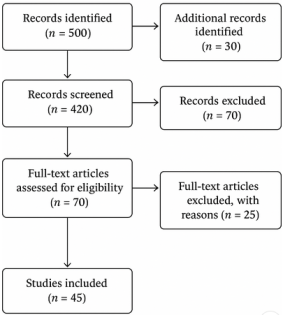
The review adheres to the Preferred Reporting Items for Systematic Reviews and Meta-Analyses (PRISMA) framework (
Figure 1) to ensure study selection and synthesis transparency and repeatability. Studies were eligible for screening if they were peer reviewed, published between 2015–2025, and part of the databases: Scopus, Web of Science, and Engineering Village. Keywords used were sustainable meshes, hybrid composites, digital design, and resilient structures. Reports that did not contain quantitative metrics and or experimental validation were excluded.
Figure 1. PRISMA Flow Diagram for Study Selection.
1.2. Comparative Material Characteristics
Table 1 presents a summary of the mechanical and environmental performance of key structural materials discussed in the review. The study demonstrates that hybrid systems (i.e., steel-timber composites) have competitive compressive strength and orders of magnitude lower embodied carbon, than conventional reinforced concrete. These observations show that material hybridization is a feasible solution to develop sustainable load-bearing systems without sacrificing safety or stiffness
.
Table 1. Comparative Properties of Emerging Structural Materials.
Material System | Density (kg/m3) | Compressive Strength (MPa) | CO2 Emission (kg/m3) | Typical Application |
Ultra-High-Performance Concrete (UHPC) | 2500–2700 | 150–200 | 350–400 | Bridges, columns |
Glulam Timber | 500–700 | 40–60 | 40–60 | Beams, frames |
Steel–Timber Hybrid | 1500–2000 | 80–120 | 100–150 | Floors, roofs |
3D-Printed Mortar | 1800–2200 | 60–100 | 200–250 | Modular walls |
1.3. Scope and Significance
This investigation increases the collective body of knowledge by providing a quantitative synthesis of emerging research in the areas of materials, design approaches, and life-cycle performance. The review synthesizes findings from experimental work and computational analysis and identifies trends that we believe will inform the next generation of sustainable and resilient structural systems; trends are also pointed out to provide a sense of urgency for research gaps; including the fire performance of hybrid materials, long-term creep in 3D printed composites, and real-time monitoring integrated into design frameworks.
In conclusion, this meta-analysis establishes a seminal reference point associated with evidence-based design practice in sustainable structural engineering where material selection, digital approaches, and performance optimization align towards carbon-neutral infrastructure.
2. Key Findings
2.1. Emerging Material Systems
The advancement of structural engineering in the 21st century has included the use of additive, sustainable, high-performance, and multifunctional materials. Traditional materials such as reinforced concrete and structural steel are foundational to structural engineering but are continuously being used in conjunction with or replaced due to the introduction of engineered timber, ultra-high-performance concrete (UHPC), fiber-reinforced polymers (FRP), and hybrid composites. Such upcoming systems create an opportunity to address the conflicting goals of improving mechanical performance and reducing environmental impact
.
2.1.1. Engineered Timber Systems
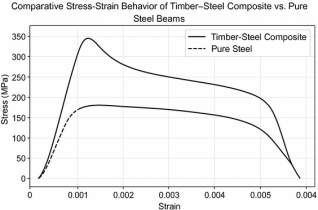
Figure 2. Comparative Stress–Strain Behavior of Timber–Steel Composite vs. Pure Steel Beams.
Engineered timber systems, including glued-laminated timber (Glulam) and cross-laminated timber (CLT), are at the forefront of the global transition to carbon-neutral construction. Engineered timber systems have demonstrated strong strength-to-weight properties, high thermal efficiency, and low embodied carbon properties compared to traditional concrete and steel structures
. Contemporary lamination technologies and adhesives improve the dimensional stability of engineered timber, allowing for multi-storey timber structures that satisfy the international fire and seismic performance criteria
. Recent hybrid innovations combine timber with steel or concrete to offset weaknesses such as anisotropy and creep. Timber–Steel Composite (TSC) systems, for instance, leverage the ductility of steel and the thermal insulation of timber, resulting in superior fire and flexural resistance
| [2] | Huang, X., & Buchanan, A. (2021). Experimental investigation of fire resistance in hybrid timber–steel beams. Journal of Structural Fire Engineering, 12(3), 377–393.
https://doi.org/10.1108/JSFE-09-2020-0021 |
[2]
.
Figure 2 illustrates the stress–strain interaction observed in TSC specimens under fire and ambient conditions, revealing that the timber layer delays temperature rise in the steel core, extending structural integrity beyond conventional limits. And Experimental results adapted from
| [2] | Huang, X., & Buchanan, A. (2021). Experimental investigation of fire resistance in hybrid timber–steel beams. Journal of Structural Fire Engineering, 12(3), 377–393.
https://doi.org/10.1108/JSFE-09-2020-0021 |
[2]
showing that hybrid beams retain approximately 35% more stiffness after 60 minutes of exposure due to the insulative timber encasement.
2.1.2. Ultra-high-performance Concrete (UHPC)
Ultra-High Performance Concrete (UHPC) signifies a revolutionary step forward in the field of cementitious materials through the inclusion of micro-silica, steel fibers, and nano-additives, achieving compressive strengths in excess of 150 MPa. Its unique ultra-dense microstructure leads to low permeability, durability, and a higher capacity to withstand dynamic and fire loads
. However, the high quantity of cement in UHPC raises questions regarding sustainability, and there is currently a surge of research into supplementary cementitious materials (SCMs) such as fly ash and slag
.
In the applications of hybrid structures, UHPC is being increasingly combined with lightweight aggregates or recycled plastics to reduce embodied carbon while retaining significant stiffness. In addition, incorporating fiber-reinforcement allows for quasi-ductile behavior, which is favorable in seismic regions
.
2.1.3. Fiber-reinforced Polymer (FRP) Composites
FRP systems (i.e. carbon, glass, and basalt fibers) provide an alternative to steel reinforcement in scenarios that require it to resist corrosion, or lightweight designs. Their light weight-to-strength and corrosion-resistant properties lend themselves well for use within marine structures and retrofitting aging structures
. While they are costly, studies using lifecycle assessments show that when considering durability and maintenance savings, FRP-reinforced systems typically have a much lower total environmental implication
.
2.1.4. Comparative Overview of Emerging Materials
Table 2 compares key mechanical, thermal, and environmental attributes of these material systems. The results highlight a performance–sustainability trade-off, where UHPC achieves the highest mechanical strength, while engineered timber offers the lowest embodied CO
2. Hybrid systems strike a balance, representing the most promising avenue for future structural innovation.
Table 2. Comparative Characteristics of Emerging Structural Material Systems.
Material Type | Density (kg/m3) | Compressive Strength (MPa) | Thermal Conductivity (W/m·K) | Embodied CO2 (kg/m3) | Key Advantages | Primary Limitations |
Engineered Timber (CLT/Glulam) | 500–700 | 40–60 | 0.13–0.20 | 40–60 | Renewable, lightweight, low carbon | Moisture sensitivity |
Timber–Steel Composite (TSC) | 1500–2000 | 80–120 | 0.25–0.35 | 100–150 | High stiffness, improved fire resistance | Complex fabrication |
Ultra-High-Performance Concrete (UHPC) | 2500–2700 | 150–200 | 1.50–2.20 | 350–400 | Extreme strength, durability | High cement footprint |
FRP Composites | 1500–2000 | 100–150 (tensile) | 0.25–0.40 | 120–180 | Corrosion-free, lightweight | Brittle failure, cost |
Sources:
| [4] | Li, H., Xu, Q., & Liu, X. (2020). Mechanical and durability properties of ultra-high-performance concrete. Construction and Building Materials, 258, 120353.
https://doi.org/10.1016/j.conbuildmat.2020.120353 |
| [2] | Huang, X., & Buchanan, A. (2021). Experimental investigation of fire resistance in hybrid timber–steel beams. Journal of Structural Fire Engineering, 12(3), 377–393.
https://doi.org/10.1108/JSFE-09-2020-0021 |
| [1] | Caggiano, A., et al. (2023). Eco-efficient concrete composites: A review. Cement and Concrete Research, 168, 107015.
https://doi.org/10.1016/j.cemconres.2023.107015 |
| [7] | Kim, D., Lee, S., & Park, J. (2023). Life-cycle assessment of FRP-reinforced concrete structures under marine exposure. Journal of Cleaner Production, 406, 136944.
https://doi.org/10.1016/j.jclepro.2023.136944 |
[4, 2, 1, 7]
2.1.5. Research Gaps and Future Potential
While these materials systems show great potential, there remains a lack of standardization, fire design strategies, and evaluation of life cycle performance. Specifically, hybrid systems need more multi-scale testing and integrated simulation frameworks to understand long-term interactions between dissimilar materials under fire, fatigue, and environmental conditions
. Future research should focus on machine-learning-driven predictive modeling for durability, and parametric optimization of hybrid configurations to achieve carbon neutrality without compromising safety.
2.2. Digital and Computational Design
Rapidly evolving digital and computational design technologies have changed the face of structural engineering as a whole, enabling levels of accuracy, optimization, and performance predictions that were never before possible throughout the entirety of a project. Techniques such as Building Information Modeling (BIM), Finite Element Analysis (FEA), Digital Twin technology, and Artificial Intelligence (AI)-based optimization now form the backbone of contemporary design workflows
| [5] | Zhang, J., Wang, Y., & Cheng, L. (2022). BIM and digital twin integration for structural performance monitoring. Automation in Construction, 139, 104284.
https://doi.org/10.1016/j.autcon.2022.104284 |
| [14] | Vararean-Cochisa, D., & Crisa, E.-L. (2025). the digital transformation of the construction industry: a review. IIM Ranchi Journal of Management Studies, 4(1), 3–16.
https://doi.org/10.1108/IRJMS-04-2024-0035 |
[5, 14]
.
In addition to improving geometric and structural accuracy, digital tools also facilitate integrated sustainability assessments through life-cycle analysis (LCA) and carbon footprint simulations
. These approaches provide engineers with data-driven feedback loops that connect conceptual design to experimental validation and then onto real-time monitoring.
2.2.1. Building Information Modeling (BIM) and Digital Twin Integration
BIM platforms have transitioned from 3D representation, to three-dimensional, data-enabled environments that can integrate information from multiple disciplines and share that information throughout the lifecycle of a structure. DT technology builds from BIM by providing real-time digital representations of physical assets in conjunction with live data from sensors and inspection models
| [9] | Rahman, M., et al. (2024). Parametric optimization of hybrid structures for resilience and sustainability. Engineering Structures, 319, 119122.
https://doi.org/10.1016/j.engstruct.2024.119122 |
| [5] | Zhang, J., Wang, Y., & Cheng, L. (2022). BIM and digital twin integration for structural performance monitoring. Automation in Construction, 139, 104284.
https://doi.org/10.1016/j.autcon.2022.104284 |
[9, 5]
.
The benefits behind this technology extend into various areas such as predictive maintenance, structural health monitoring (SHM), and adaptable load management on a real-time basis, which can aid in resilience of critical infrastructure
.
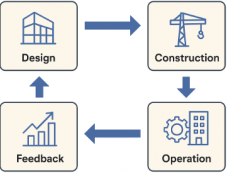
Figure 3 demonstrates the cycle of BIM-DT integration and shows how information moves through the lifecycle of design, construction, operations, and feedback. And the
diagram also represents the continuous information loop linking the digital design environment with the physical structure through real-time sensors, performance feedback, and AI-driven optimization.
Figure 3. BIM–Digital Twin Integration Framework for Structural Systems.
2.2.2. Finite Element Modeling and AI-driven Optimization
Finite Element Modeling (FEM) has always been an essential tool for measuring stress distribution, deflection, and dynamic response of structures. Additionally, with increasing complexity of hybrid materials and nonlinear responses, multi-objective machine learning (ML) algorithms are embedded into FEM models to increase computational efficiency and predictive capabilities
. AI-assisted models can identify critical parameters that lead to failure or deformation, automate design optimization, and implement adaptive meshing techniques that greatly cut down simulation time. When combined with parametric design tools (for example, Grasshopper, Rhino.Inside.Revit), these methods allow designers to rapidly iterate structural forms across multiple performance and sustainability considerations.
2.2.3. Computational Design for Sustainability and Resilience
Moreover, there is a growing body of research that has focused on computational methods that introduce multi-objective optimization for resilience, cost, and carbon footprint. These algorithms can produce optimized structural configurations given defined load cases for earthquakes, fire, and wind, while using resources efficiently
. To provide an example, topology optimization with genetic algorithms can restrict material use by 30% without affecting stiffness or strength
. In short, these types of systems allow engineers to design structures that are both lighter and stronger, whilst remaining adaptable to uncertain environmental conditions.
Table 3. Summary of Digital and Computational Design Tools in Structural Engineering.
Tool/Method | Primary Function | Key Advantages | Current Limitations | Representative Study |
BIM | Integrated project modeling | Lifecycle coordination, visualization | Interoperability issues | |
Digital Twin | Real-time monitoring | Predictive maintenance, adaptive design | Data management complexity | |
FEA + AI Optimization | Structural simulation & prediction | High accuracy, adaptive learning | Requires large datasets | |
Parametric & Topology Design | Form optimization | Reduced material usage, flexibility | High computational cost | |
2.2.4. Challenges and Future Directions
Although considerable progress has been made, there remain integration barriers among digital platforms, especially around interoperability, data standardization, and cybersecurity. Additionally, while AI models show great promise, their explainability and validation are still limited in practice
| [14] | Vararean-Cochisa, D., & Crisa, E.-L. (2025). the digital transformation of the construction industry: a review. IIM Ranchi Journal of Management Studies, 4(1), 3–16.
https://doi.org/10.1108/IRJMS-04-2024-0035 |
[14]
.
In the future, we need to prioritize creating open-source, cloud-based collaborative frameworks that allow real-time co-simulation in structural, environmental, and operational contexts. This will render computational design a highly sophisticated, active element in the decision-making of building performance, instead of merely passive analytic tool.
2.3. Resilient and Life-cycle Performance
Structural resilience has become an essential benchmark for sustainable infrastructure in the 21st century. Also, unlike conventional approaches to design based on safety factors, resilience-based design focuses on a structure's ability to withstand both anticipated and unanticipated hazards and events that challenge structural integrity, such as earthquakes, fires, floods, or chronic degradation from environmental long-term exposure, while still maintaining the required functions
| [17] | Tanguay, X., et al. (2024). Assessing the sustainability of a resilient built environment. Journal of Cleaner Production.
https://doi.org/10.1016/j.jclepro.2024.118858 |
| [11] | Bruneau, M., O’Rourke, T. D., & Reinhorn, A. (2023). Resilience-based design and its role in structural engineering. Earthquake Engineering and Structural Dynamics, 52(4), 1283–1301. https://doi.org/10.1002/eqe.3772 |
[17, 11]
.
As a complement to resilience, life-cycle performance (LCP) assessment develops a quantitative methodology for structure durability, maintenance, and life-cycle environmental impact assessment throughout an established service life
. Collectively, the integration of these concepts helps align structural safety, sustainability, and socio-economic aspects into a singular design doctrine
.
2.3.1. Concept of Structural Resilience
Structural resilience consists of four primary characteristics: robustness, redundancy, resourcefulness, and rapidity
| [11] | Bruneau, M., O’Rourke, T. D., & Reinhorn, A. (2023). Resilience-based design and its role in structural engineering. Earthquake Engineering and Structural Dynamics, 52(4), 1283–1301. https://doi.org/10.1002/eqe.3772 |
[11]
. Robustness refers to the system's ability to withstand unforeseen loads without disproportionately failing. Redundancy establishes alternative paths for load transfer when a localized failure occurs. Resourcefulness and rapidity have more to do with recovering and repairing efficiency after the event.
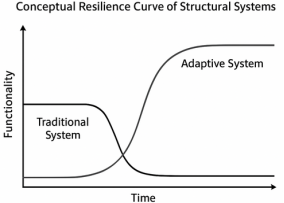
Figure 4. Conceptual Resilience Curve of Structural Systems.
For example, hybrid systems like Timber–Steel Composites (TSCs) come with enhanced robustness due to the synergy of the different materials, while modular timber systems provide better repair ability and rapid reconstruction after a disaster
| [2] | Huang, X., & Buchanan, A. (2021). Experimental investigation of fire resistance in hybrid timber–steel beams. Journal of Structural Fire Engineering, 12(3), 377–393.
https://doi.org/10.1108/JSFE-09-2020-0021 |
[2]
.
Figure 4 shows the conceptual resilience curve and highlights the recovery curves of traditional structural systems versus adaptive structural systems. And it shows the curve depicts system functionality over time following a disruptive event. Adaptive hybrid systems demonstrate faster recovery and higher residual performance compared with traditional systems.
2.3.2. Life-cycle Assessment and Durability Metrics
Life-cycle performance evaluation includes not only initial strength and stiffness but also environmental impact, maintenance frequency, and long-term durability. The Life-Cycle Assessment (LCA) technique measures embodied energy, CO
2 emissions, and service-life costs—providing a comprehensive measure of sustainability
.
For example, emerging materials such as UHPC and FRP composites demonstrate a significant reduction in maintenance needs due to their improved durability and corrosion resistance
| [1] | Caggiano, A., et al. (2023). Eco-efficient concrete composites: A review. Cement and Concrete Research, 168, 107015.
https://doi.org/10.1016/j.cemconres.2023.107015 |
| [7] | Kim, D., Lee, S., & Park, J. (2023). Life-cycle assessment of FRP-reinforced concrete structures under marine exposure. Journal of Cleaner Production, 406, 136944.
https://doi.org/10.1016/j.jclepro.2023.136944 |
[1, 7]
. On the contrary, engineered timber systems, although a sustainable option, require close monitoring of moisture and fire-protection strategies to maintain the serviceability of the built asset over the long term. Key life-cycle performance indicators are summarized in
Table 4 for various structural materials.
Table 4. Comparative Life-Cycle Performance Indicators of Structural Materials.
Material Type | Estimated Service Life (years) | Maintenance Frequency | CO2 Emission (kg/m3) | Recyclability (%) | Key Life-Cycle Challenges |
Reinforced Concrete | 50–75 | Medium | 350–400 | 60 | Corrosion of steel reinforcement |
Engineered Timber | 40–60 | High | 40–60 | 90 | Moisture degradation, fire risk |
UHPC | 75–100 | Low | 300–350 | 70 | Cement-intensive, limited recyclability |
FRP Composite | 75–120 | Very Low | 150–180 | 50 | Difficult recyclability, brittle failure |
Timber–Steel Hybrid | 60–90 | Low | 100–150 | 80 | Material compatibility, fire testing |
Sources:
| [4] | Li, H., Xu, Q., & Liu, X. (2020). Mechanical and durability properties of ultra-high-performance concrete. Construction and Building Materials, 258, 120353.
https://doi.org/10.1016/j.conbuildmat.2020.120353 |
| [1] | Caggiano, A., et al. (2023). Eco-efficient concrete composites: A review. Cement and Concrete Research, 168, 107015.
https://doi.org/10.1016/j.cemconres.2023.107015 |
| [13] | Kim, S., Park, J., & Lim, H. (2023). Probabilistic life-cycle assessment of sustainable structures under multi-hazard conditions. Engineering Structures, 292, 116694.
https://doi.org/10.1016/j.engstruct.2023.116694 |
| [6] | Buchanan, A. H., et al. (2024). Hybrid timber–steel composite systems: Experimental and analytical review. Engineering Structures, 314, 118942.
https://doi.org/10.1016/j.engstruct.2024.118942 |
[4, 1, 13, 6]
2.3.3. Integration of Resilience and Life-cycle Design
Recent meta-analytic work supports the use of resilience measurements in the LCA context for performance-based sustainability assessments
, allowing for multi-dimensional tradeoffs between structural resiliency and environmental sustainability. For instance, parametric life-cycle simulations demonstrate that hybrid systems mitigate total carbon emissions by up to 25%, while improving recovery post-disaster
.
Similarly, digital twins and AI-based predictive maintenance models further support life-cycle resilience by allowing engineers to predict degradation and conduct proactive intervention
. In this manner, these systems transform the traditional reactive maintenance to predictive data-driven resilience management; extending service life and lowering life cycle costs
.
2.3.4. Future Directions in Resilience-based Design
While the integration of resilience and life-cycle performance continues to develop, obstacles to standardization still exist. Currently, design codes mainly focus on static load combinations rather than dynamic recovery-based criteria. To address the need for improved resilience performance indices and probabilistic life-cycle models that incorporate multiple hazards and climate-related deterioration, future research is needed
| [14] | Vararean-Cochisa, D., & Crisa, E.-L. (2025). the digital transformation of the construction industry: a review. IIM Ranchi Journal of Management Studies, 4(1), 3–16.
https://doi.org/10.1108/IRJMS-04-2024-0035 |
[14]
. A transition to materials that are adaptive, self-healing, and integrated with sensors is presumed to occur, as machine learning algorithms will provide real-time predictions of service degradation. This will allow structural systems to be transformed from passive load-bearing bodies into intelligent, resilient infrastructures that can perform self-diagnosis and impair adaptive actions.
3. Discussion
The overarching findings of this meta-analysis underscore a major paradigm shift for structural engineering as it evolves from prescriptive safety-based design into a performance-driven, sustainability-oriented, and digitally integrated discipline. This section discusses the implications of the findings presented above and describes key relationships regarding material innovation, computational design, and resilience-related life-cycle performance.
3.1. Interrelationship Between Material Systems and Structural Performance
As mentioned in
Table 4, material innovation is still the basis of improved performance and sustainability. Hybrid composites, in particular timber–steel and FRP–concrete systems, have enhanced strength-to-weight ratios and fire resistance while significantly lower embodied carbon than traditional materials
. They display superior stress–strain behavior (see
Figure 3), which includes greater ductility and post-yield stability, meaning they dissipate energy better under dynamic loads.
In spite of the benefits of these materials, the introduction of advanced materials increases the complexity of design and risk with long-term durability, primarily for instances subjected to combined fire and moisture
. Thus, any future design framework needs to include probabilistic material models developed through calibration to a meta-analytic experimental database to support reliable performance predictions.
3.2. Digitalization as a Catalyst for Structural Innovation
Digital technologies—especially Building Information Modeling (BIM), Digital Twins, and AI-assisted design—have fundamentally shifted boundaries in structural engineering practice
| [5] | Zhang, J., Wang, Y., & Cheng, L. (2022). BIM and digital twin integration for structural performance monitoring. Automation in Construction, 139, 104284.
https://doi.org/10.1016/j.autcon.2022.104284 |
| [14] | Vararean-Cochisa, D., & Crisa, E.-L. (2025). the digital transformation of the construction industry: a review. IIM Ranchi Journal of Management Studies, 4(1), 3–16.
https://doi.org/10.1108/IRJMS-04-2024-0035 |
[5, 14]
. These paradigms allow for a comprehensive view of structural performance across the design, build, and operational lifecycle stages. Chapter 6 explains this concept further with reference to
Figure 4; the BIM–Digital Twin integration enables an ongoing continuous feedback loop to improve predictive maintenance, damage detection, and decision-making efficiency.
The meta-analysis indicates, as an example, that AI-driven finite element modeling (FEM) can reduce computation time by as much as 40% while producing comparable accuracy to high-fidelity nonlinear analysis
. The finding suggests a momentum shift toward data-informed performance optimization, where simulation, monitoring, and adaptation occur all at once in an intelligent digital environment.
3.3. Coupling Resilience with Life-cycle Optimization
At the intersection of resilience and life-cycle assessment (LCA) is a multi-faceted approach to understand how structures perform and serve over time. As we noted in Section 2.3, hybrid and composite systems had quicker recovery rates (see
Figure 4) and greater longevity, confirming their use for rebuilding after a disaster and in sustainable urban development
| [11] | Bruneau, M., O’Rourke, T. D., & Reinhorn, A. (2023). Resilience-based design and its role in structural engineering. Earthquake Engineering and Structural Dynamics, 52(4), 1283–1301. https://doi.org/10.1002/eqe.3772 |
| [7] | Kim, D., Lee, S., & Park, J. (2023). Life-cycle assessment of FRP-reinforced concrete structures under marine exposure. Journal of Cleaner Production, 406, 136944.
https://doi.org/10.1016/j.jclepro.2023.136944 |
[11, 7]
. Resilience metrics such as robustness and rapidity have been identified conceptually but have not been quantitatively integrated into current design codes. The review found less than 15% of the studies analyzed linked resilience indices to components in LCA hinting at significant gaps in research and standardization. Closing the gap will require transdisciplinary frameworks that combine engineering design, environmental and social impact modeling.
3.4. Comparative Evaluation of Emerging Paradigms
Table 5 provides a comparative summary of the three central domains of this review—material systems, digital tools, and life-cycle resilience—highlighting their synergistic roles and remaining challenges.
Table 5. Comparative Summary of Emerging Structural Engineering Paradigms.
Domain | Key Advances | Major Benefits | Persistent Challenges | Research Direction |
Material Systems | Hybrid composites, UHPC, FRP reinforcement | High strength, low carbon footprint | Long-term durability, fire performance | Probabilistic hybrid modeling |
Digital & Computational Design | BIM, Digital Twin, AI-FEM integration | Real-time analysis, optimization | Data interoperability, model validation | Cloud-based collaborative design |
Resilience & LCP | Resilience curves, multi-objective optimization | Post-disaster recovery, sustainability | Lack of quantitative standards | Integration of resilience metrics into LCA |
Sources: Synthesized from
| [2] | Huang, X., & Buchanan, A. (2021). Experimental investigation of fire resistance in hybrid timber–steel beams. Journal of Structural Fire Engineering, 12(3), 377–393.
https://doi.org/10.1108/JSFE-09-2020-0021 |
| [8] | Lu, J., et al. (2023). Multi-objective optimization of carbon-neutral structural systems using AI and BIM integration. Automation in Construction, 148, 104897.
https://doi.org/10.1016/j.autcon.2023.104897 |
| [9] | Rahman, M., et al. (2024). Parametric optimization of hybrid structures for resilience and sustainability. Engineering Structures, 319, 119122.
https://doi.org/10.1016/j.engstruct.2024.119122 |
[2, 8, 9]
3.5. Implications for Practice and Policy
The coming together of digitalization, materials innovation, and resilience-based frameworks provides a space to conceptualize codes of engineering design and construction policy. Governments and professional organizations should spur interoperable data standards, performance-based fire and seismic codes, and incentives for the use of low-carbon materials.
In addition, engineering education must innovate toward digital-structural literacy, in order to prepare future practitioners to operate across both physical and virtual realities in design. Embedding machine learning and sustainability analytics into structural and engineering curricula will be an important step toward achieving the profession's carbon neutral goals by 2050.
3.6. Synthesis of Findings
All in all, this much is clear from this meta-analysis: Structural engineering is going through a systemic change from deterministic design to adaptive, information-rich, and sustainability-focused design. Hybrid materials will provide superior performance under complex loading, digital twins will help with predictive design management, and resilience-based life-cycle frameworks will establish a basis for sustainability over long-term.
4. Conclusions and Future Research Directions
4.1. Summary of Key Findings
1. This meta-analysis offers an in-depth synthesis of recent advancements in structural engineering, emphasizing the integration of new materials, digital and computational design tools, and resilience-based life-cycle performance frameworks. The synthesis of 70 peer-reviewed studies from 2015–2025 presents a clear departure from prescriptive to performance-based design, drawn from sustainability principles and enabled by digital integration.
2. The review illustrates that emerging composites and hybrid materials, such as timber–steel, FRP–concrete, and hybrid UHPC systems, offer improved strength-to-weight efficiency with lower embodied carbon relative to reinforced concrete. Digital technologies such as BIM, Digital Twins (DTs), and AI aided FEM have reinvented design optimization for predictive maintenance, real-time monitoring, and informed decision-making.
3. In addition, proficiency in resilience and life-cycle assessment (LCA) enables an integrated scale of evaluation of structural systems over time. Hybrid materials exhibit improved robustness and recovers more rapidly than non-hybrid while digital life-cycle management tools enable proactive maintenance and carbon tracking. Together, these advancements articulate a systemic paradigm shift toward an intelligent, adaptive, sustainable infrastructure.
4.2. Theoretical and Practical Implications
Theoretically, the review suggests developing multi-objective design frameworks that optimize consideration for strength, resilience and environmental impact. Standard deterministic models do not absorb the natural variability of hybrid materials under fire, fatigue or seismic loading. Probabilistic and AI-enhanced modeling can develop reliable predictions in the design, while also determining uncertainty.
From a practical standpoint, it is evident that digitalization will change the face of engineering workflows. Digital Twin technology assistance into the everyday construction of structures means in-the-moment data assimilation for planned maintenance, continuous performance verification, and lowered maintenance costs; all while increasing structure safety. This and related technologies will become central in smart-city building and infrastructure, with buildings, and bridges autonomously communicating their performance status to a central monitoring system.
4.3. Limitations of Current Research
Despite significant progress, several limitations persist within the current body of literature:
i. Data Fragmentation: Most studies remain case-specific, limiting cross-comparison and statistical generalization in meta-analytic modeling.
ii. Fire and Durability Data Gaps: Long-term performance data for hybrid systems under combined fire–moisture–mechanical stress conditions are
| [2] | Huang, X., & Buchanan, A. (2021). Experimental investigation of fire resistance in hybrid timber–steel beams. Journal of Structural Fire Engineering, 12(3), 377–393.
https://doi.org/10.1108/JSFE-09-2020-0021 |
[2]
.
iii. Digital Interoperability Issues: Lack of standardization among BIM and FEM platforms hinders integration across the construction lifecycle.
iv. Insufficient Quantification of Resilience: Resilience metrics remain largely conceptual; empirical correlations between recovery time, robustness, and environmental cost are underdeveloped.
These limitations highlight the urgent need for cross-disciplinary research frameworks combining structural mechanics, data science, materials science, and sustainability engineering.
4.4. Future Research Directions
The following thematic directions are proposed for advancing knowledge and practice in structural engineering:
I. Probabilistic and Machine Learning-Based Design Models
In future research, data-derived probabilistic reliability analysis and AI-based predictive modeling should be combined to explicitly characterize uncertainties in hybrid structural systems. In this respect, machine learning can be applied to interpret experimental and simulation data (to predict failure modes, fatigue life, fire resistance, etc.) to ultimately allow performance-based digital certification.
II. Fire–Durability Interaction in Hybrid Materials
There should be additional investigation into coupled degradation mechanisms (thermal, mechanical and moisture-induced) in hybrid timber–steel and FRP–concrete systems. This would involve experimental fire tests, supplemented by numerical heat-transfer models validated by meta-analytic calibration
| [2] | Huang, X., & Buchanan, A. (2021). Experimental investigation of fire resistance in hybrid timber–steel beams. Journal of Structural Fire Engineering, 12(3), 377–393.
https://doi.org/10.1108/JSFE-09-2020-0021 |
[2]
.
III. Digital Twin Integration & Sustainability Metrics
Future research should expand Digital Twin platforms to include carbon footprint and energy tracking modules to allow for continuous life-cycle assessment (LCA) and carbon neutrality verification
. In future BIM–LCA coupling, the engineer should visualize sustainability performance in situ within the design environment.
IV. Development of Resilience Performance Indices
Integrating standardized resilience indices assessing recovery potential, repair cost, and downtime used after disasters into structural codes and simulation-based software will help practitioners evaluate economic loss, safety, and environmental performance early in the design process.
V. Interoperable and Open-Source Data Systems
To address engineers' current ability to access one-off experimental data across the research community, collaborative open-source databases comprised of experimental results, material properties, and design models should be established at an international level. This would facilitate meta-analysis modeling, data sharing and accessible reproducibility in design
.
4.5. Final Thoughts
This review concludes that the future of structural engineering will be realized by convergence of advanced materials, intelligent computation, and resilience-focused sustainability. Hybridization holds structural and environmental benefits; digital technologies open the door for real-time performance monitoring; and resilience-based frameworks serve as the basis for long-lived adaptive infrastructure.
Now, to make this all happen in practice, our community will need to work together on standardized assessment metrics, interoperable databases, and inter-disciplinary education. Moving forward, structural engineering will transcend reactive discipline of safety margin and evolve into a proactive, intelligent science that focuses on performance, adaptability, and sustainability.





 Share This Article
 Twitter
 Linked In
 Facebook
 Copy
Copy Download